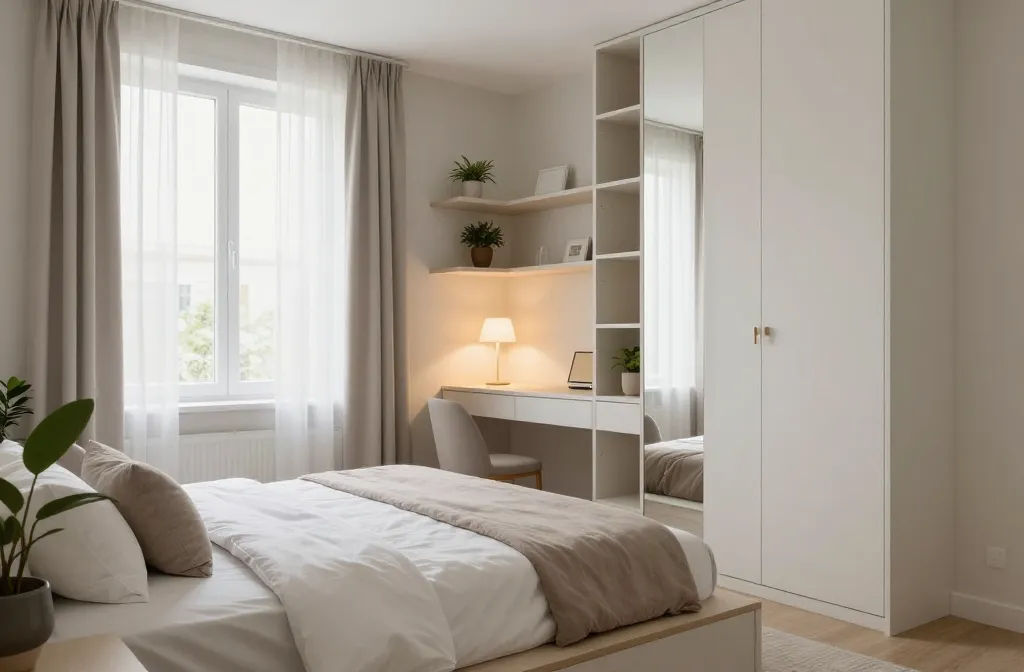
11 Simple Room Decor for a Small Bedroom That Feels Clean and Cozy You’Ll Love

As an Amazon Associate I earn from qualifying purchases.
Decorating a small bedroom does not have to be difficult. With the right simple room decor for a small bedroom, you can create a space that feels stylish, cozy, and comfortable. The key is to choose practical pieces that make the most of your available space.
Start with light colors, soft bedding, and furniture that fits the room well. Mirrors can reflect light and make the bedroom feel more open. Wall shelves, baskets, and under-bed storage can help keep everything organized without using much floor space. Add personal touches like plants, framed art, cozy pillows, or warm lighting to make the room feel inviting.
In this article, you’ll find simple room decor for a small bedroom ideas that are easy, affordable, and stylish.
Why Small Room Decor Works
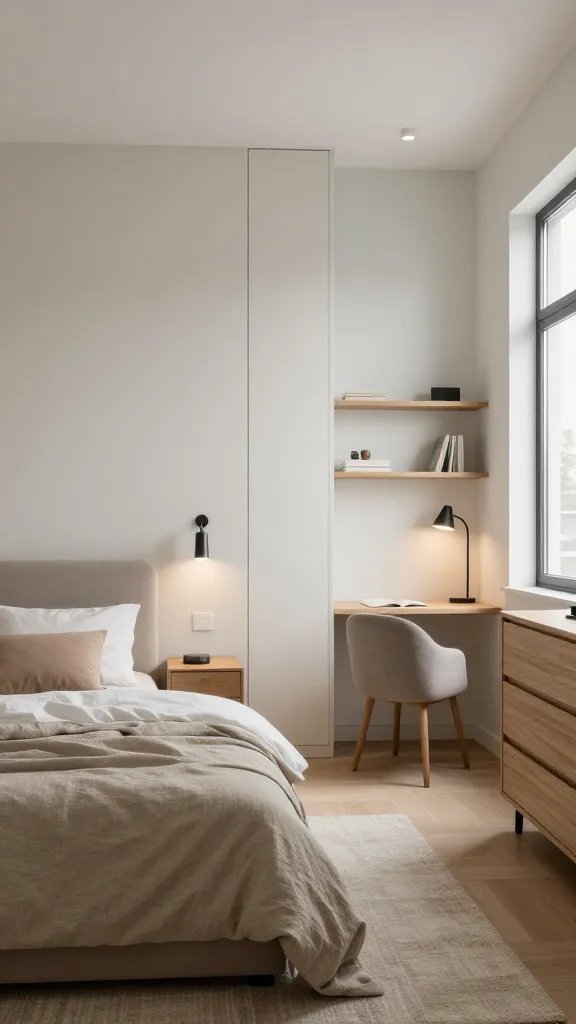
In a small bedroom the goal is to maximize function without sacrificing mood. Smart planning helps you get more usable space from every footprint, while furniture with the right scale prevents the room from feeling crowded. Thoughtful layouts improve movement and create clear zones for sleeping, dressing, and relaxing. Elevating vertical space reduces floor clutter and makes the ceiling feel higher. Color and lighting play crucial roles, too, because light walls and layered illumination can visually expand a room. Storage should serve the design, not overwhelm it, so you gain order without losing charm. These ideas are designed to fit real homes with varied tastes and budgets.
1. Corner-Loving Sleep Nook
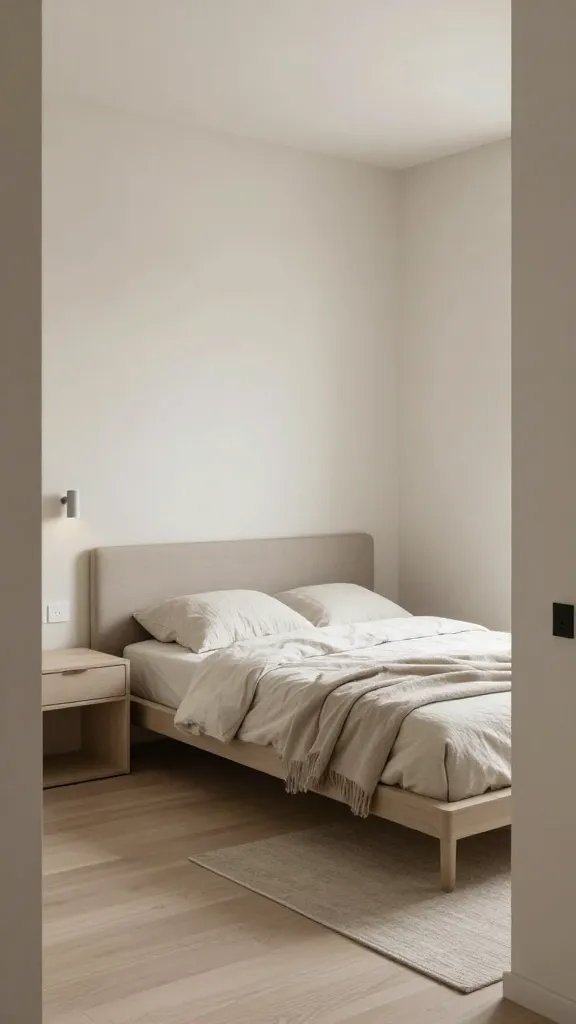
In a tight room every corner deserves a purpose, and the bed tucked into a corner creates a calmer, more defined sleeping zone. Place a low profile platform bed against one wall and angle the headboard to meet an unobtrusive wall. Use a slim nightstand on one side and a small lamp that can be mounted or hung from the wall to save surface space. The result is a calm vista when you walk in, with a clear focus on rest.
Why This Layout Works
Placing the bed into a corner opens the center of the room for movement and makes a visual cue of a private sleep zone. It reduces the feeling of a long tunnel and creates a natural reading/viewing nook nearby. The layout also minimizes foot traffic through the bed area, which is ideal for small rooms with narrow doorways or awkward entry points.
Space-Expanding Color Palette
Choose soft neutrals with a single warm accent. A warm greige on walls paired with a deeper taupe for the headboard or textile details creates depth without shrinking the space. Keep the color palette cohesive across textiles and artwork so the eye travels smoothly across the room.
Space-Saving Furniture
Opt for a low profile bed with built-in drawers or under-bed storage. A slim, wall-mounted bedside shelf or a narrow standing lamp keeps surfaces uncluttered. If possible, use a tall dresser that sits flush against the wall to respect floor space while providing necessary storage.
Storage and Decor Strategy
Use vertical storage options such as tall dressers or wall-mounted shelves above the bed to keep look lightweight. Add a mirror on the opposite wall to bounce light and visually extend the room. Keep decor minimal but meaningful with a single, larger piece of art or a framed photo that anchors the space without crowding it.
Budget-Friendly Space Upgrade
Rehang the headboard wall with a light decorative panel or peel-and-stick wallpaper in a calm pattern. It draws the eye upward and creates a refined backdrop without expensive renovation.
Small-Space Designer Insight
A corner sleep setup works best when sightlines remain clear from the entry toward the bed. Avoid placing a bulky armoire opposite the doorway; instead, emphasize continuity with a tall, slim storage unit that keeps the space open.
Who this concept suits: compact bedrooms with a single occupant or shared spaces where one side must stay open for movement and access.
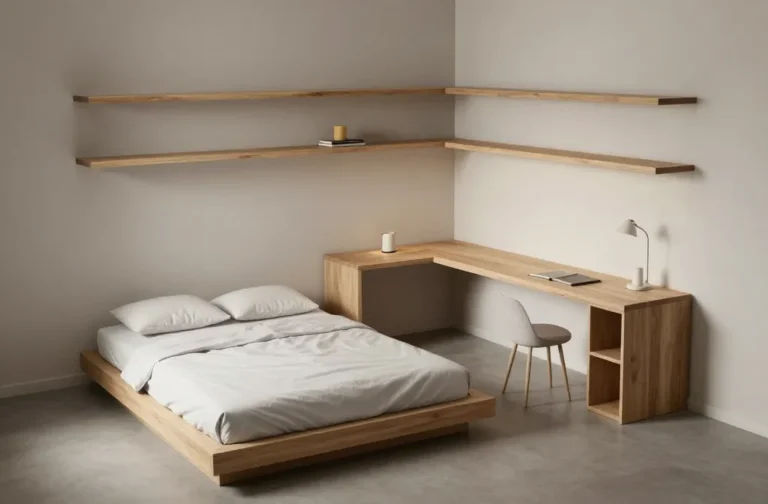
2. Floating Bed, Floating Space
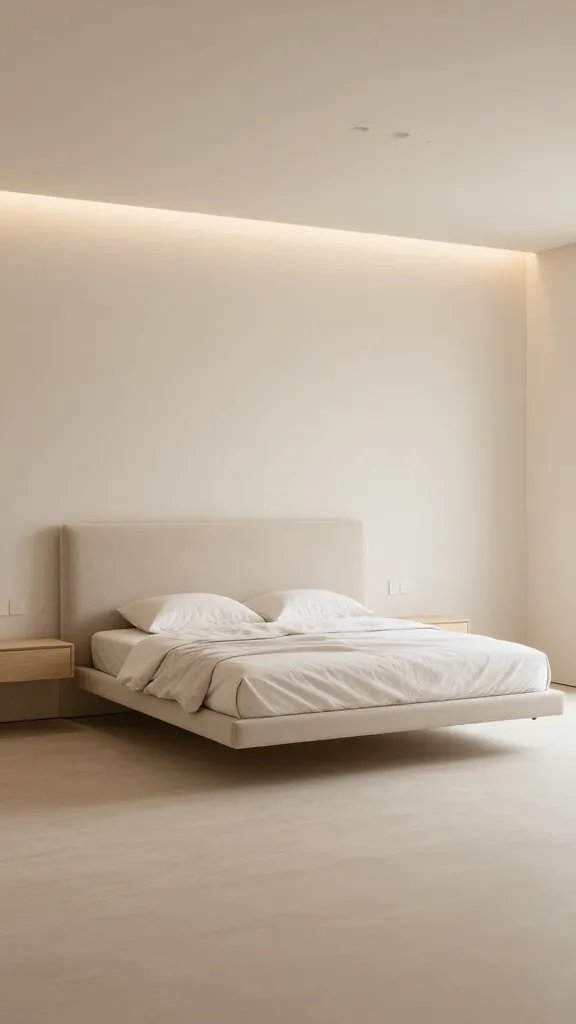
A bed that visually floats on a low platform with open space beneath creates a lighter, airier feel. Pair it with wall-mounted nightstands and a wall-to-wall headboard that acts as a soft divider, so the bed reads as a distinct zone without heavy furniture sitting directly on the floor.
Why This Layout Works
The floating effect reduces visual mass and makes the floor feel bigger. Wall-mounted pieces keep the footprint slim, allowing for easy movement around the bed and a more expansive feeling between zones like a small desk corner or seating area near a window.
Space-Expanding Color Palette
Use a monochromatic base with a gentle contrast in textiles. A pale linen on walls and a slightly darker bedding set create subtle depth while maintaining light flow through the room.
Space-Saving Furniture
Wall-mounted shelves and a slim bench at the foot of the bed provide storage and seating without bulk. Choose a headboard that doubles as a shelf for small décor or night lighting.
Storage and Decor Strategy
Emphasize hidden storage: a platform with drawers beneath the bed and a slim wall cabinet for essentials keeps clutter at bay. A tall mirror on the wardrobe wall amplifies light and space.
Budget-Friendly Space Upgrade
Paint the wall behind the bed a slightly brighter shade of your base color to create a gentle focal zone without introducing new furniture.
Small-Space Designer Insight
Keep open sightlines from the door to the bed; avoid heavy, closed storage directly opposite the entrance. This maintains a welcoming feel and makes the room appear larger as you enter.
Who this concept suits: rooms with a window that can be flattered by light and a need for open floor space near the entry.
3. Slim Dresser as Room Divider
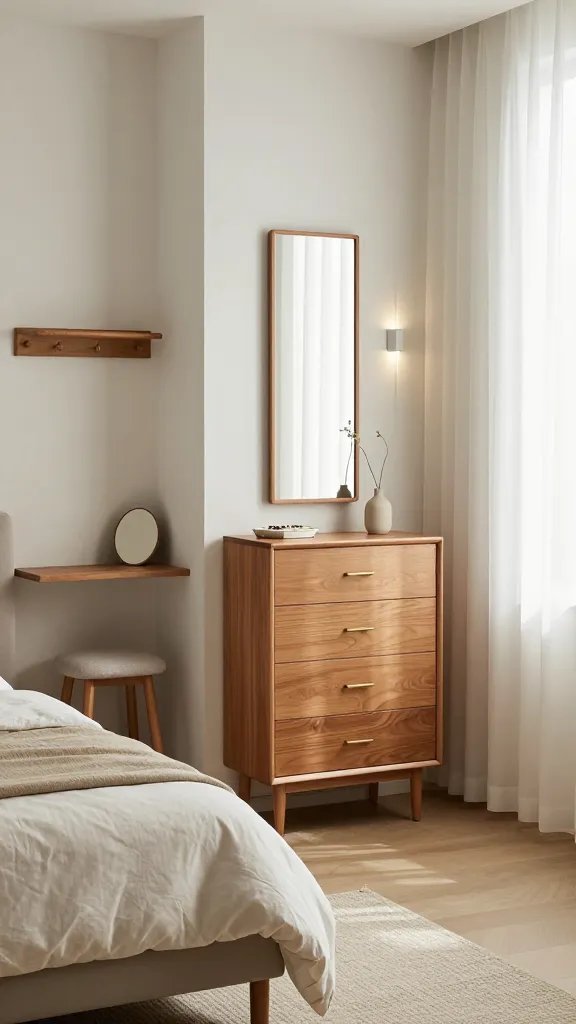
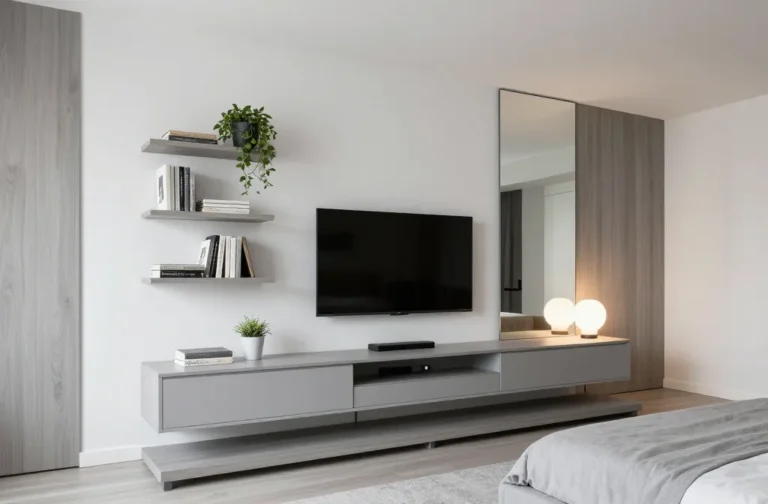
Use a slender dresser as a room divider between sleep and dressing zones. It provides practical storage while visually separating areas without a full wall. A mirror above the dresser doubles as a light booster and expands the sense of space.
Why This Layout Works
The dresser creates a soft barrier that defines spaces while remaining lightweight. It also gives you a practical surface for organizing clothes, accessories, and daily essentials without crowding the room.
Space-Expanding Color Palette
Combine a cool base color with warm wood tones on the dresser. A pop of color in a textile or art piece above the dresser adds personality without overwhelming the space.
Space-Saving Furniture
A shallow, tall dresser maximizes storage while taking up less horizontal footprint. Wall-mounted lamps flank the dresser for balanced lighting that doesn’t compete with ceiling fixtures.
Storage and Decor Strategy
Use baskets or labeled bins inside the dresser to keep small items organized. Add a narrow floating shelf above for seasonal accessories or keepsakes without reducing the open feel.
Budget-Friendly Space Upgrade
Refinish or paint existing dresser to match the room’s palette instead of buying a new piece. This keeps the space cohesive and fresh at a low cost.
Small-Space Designer Insight
When a single piece serves as a divider, ensure it’s not visually heavy. Choose a dresser with soft edges and a light finish to preserve airiness.
Who this concept suits: anyone wanting defined zones in a single-person bedroom without constructing walls.
4. All-White Calm with Warm Textures
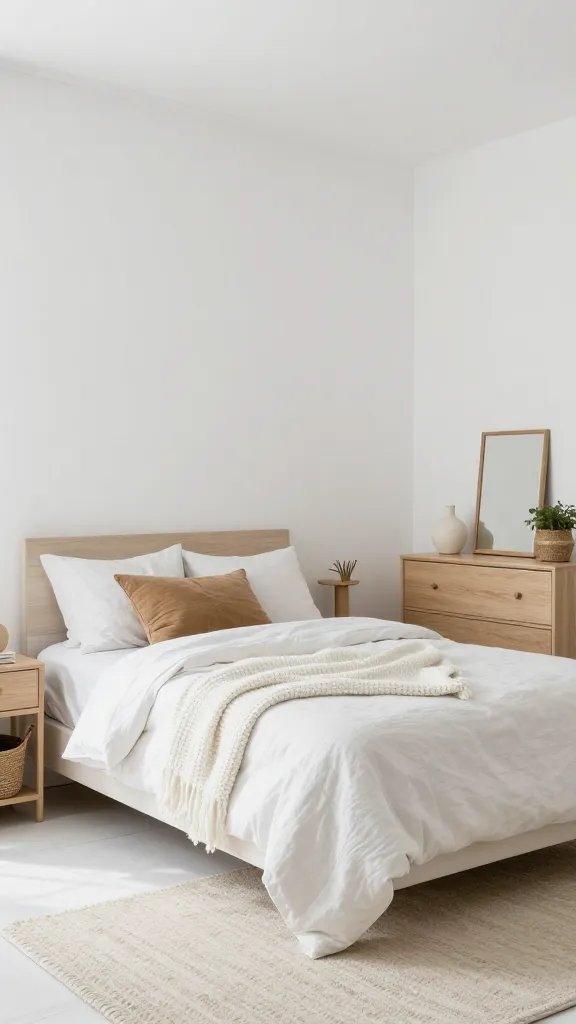
A predominantly white canvas with layered textures feels open and clean. Introduce warmth through textiles like a wool rug, linen bedding, a jute basket, and wood accent pieces. The calm palette makes small rooms feel larger while staying cozy.
Why This Layout Works
White surfaces reflect light, making the room feel brighter. Textures add depth and comfort, so the space doesn’t feel sterile or clinical.
Space-Expanding Color Palette
Stick to whites and warm neutrals with occasional tan or espresso accents. Let textiles introduce color rather than paint or large decorative elements.
Space-Saving Furniture
Choose low-profile furniture with clean lines to maintain sightlines. Use nesting tables or a small ottoman that tucks into a corner when not in use.
Storage and Decor Strategy
Opt for closed storage behind smooth panel doors to keep clutter out of sight. A few curated decorative pieces prevent the room from feeling chaotic.
Budget-Friendly Space Upgrade
Switch out a bulky throw pillow for a textured, monochrome alternative. It’s an easy change that refreshes the room without a big expense.
Small-Space Designer Insight
Mind the textiles as much as the walls. Texture and fiber type affect warmth and perceived coziness more than color alone in all-white rooms.
Who this concept suits: lovers of a serene, spa-like vibe who want warmth without bringing in heavy color blocks.
5. Light Orchard with Soft Green Accents
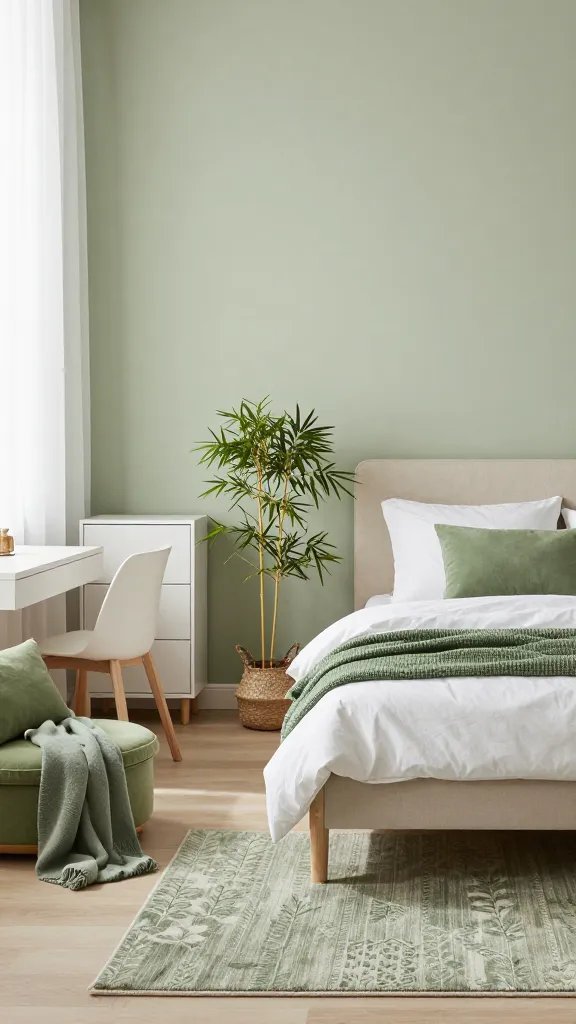
A gentle touch of green brings life to a small space while keeping the mood soft and restful. Use a light sage on walls, a mossy cushion, and a bamboo plant to introduce nature indoors. Keep furniture neutral and let color pop in textiles and plants.
Why This Layout Works
Green tones mimic nature and have a calming effect. A restrained palette keeps the room from feeling busy, which is essential in small spaces where every item competes for attention.
Space-Expanding Color Palette
Base with warm whites, add greens in textiles, and pick light wood for natural warmth. Avoid heavy contrasts that can fracture the space visually.
Space-Saving Furniture
Use a compact bed with a slim headboard, a narrow dresser, and floating shelves to keep the floor clear. A small bench at the foot of the bed doubles as seating and storage.
Storage and Decor Strategy
Incorporate a slim wardrobe with mirrored doors to bounce light and create depth. Place a few bonsai or small leafy plants to bring the outdoors in without crowding surfaces.
Budget-Friendly Space Upgrade
Add a peel-and-stick wall mural with a subtle leafy motif behind the bed. It provides depth and interest without a new paint job.
Small-Space Designer Insight
Plants should be scalable to the room size; avoid large foliage that feels overpowering. A single statement plant near the window can anchor the space elegantly.
Who this concept suits: those who love nature-inspired palettes and want a soft, airy feel with a hint of color.
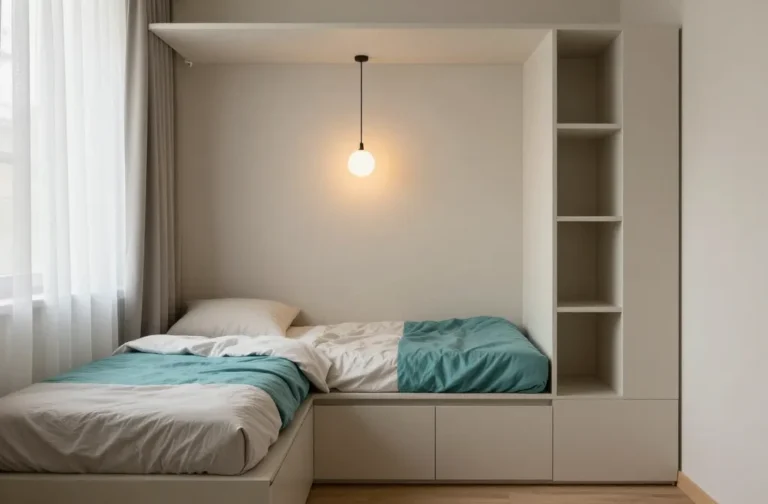
6. Built-In Nook Storage for a Minimal Look
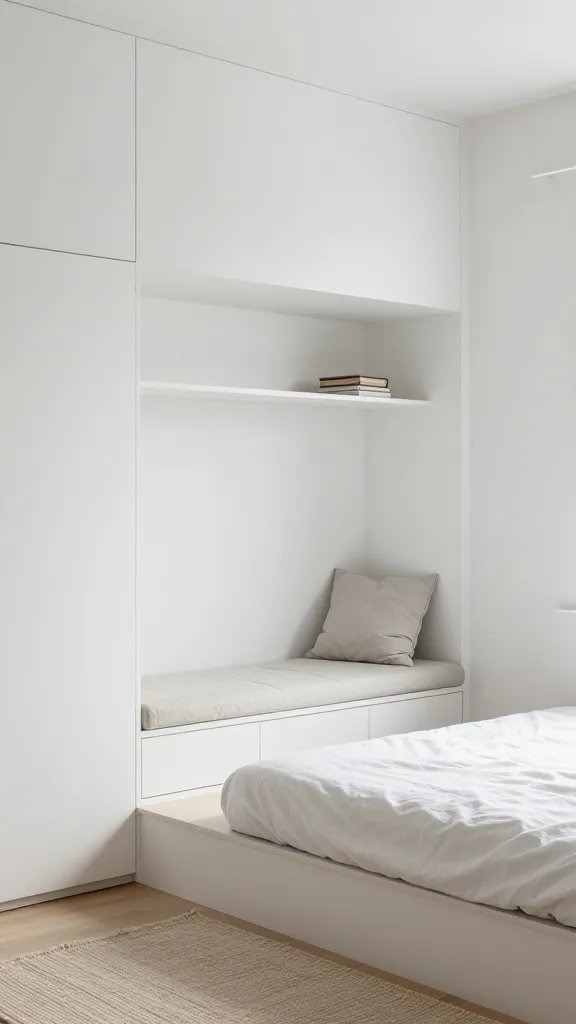
Turn an awkward alcove or unused corner into a built-in storage nook with a low bench, drawers, and a small open shelf. The bed remains uncluttered, and the nook becomes a dedicated space for clothes, blankets, and everyday items, keeping the rest of the room clean.
Why This Layout Works
Built-ins maximize every cubic inch and prevent a cabinet from stealing floor space. They can be customized to fit odd angles so you don’t lose storage in tricky corners.
Space-Expanding Color Palette
White or pale gray walls make the built-in read as part of the room rather than an imposing structure. A warm wood tone in the bench and drawers adds grounding contrast.
Space-Saving Furniture
Choose a low bench with shallow drawers and a small upper shelf for accessories. Keep the rest of the room light and simple to emphasize the built-in feature.
Storage and Decor Strategy
Use labeled bins inside the drawers and add a few decorative items on the upper shelf to soften the function with a touch of personality.
Budget-Friendly Space Upgrade
Modify an existing corner or alcove with modular panels and paints to create a built-in look using budget-friendly materials found at home improvement stores.
Small-Space Designer Insight
Keep the built-in lighter in color and slim in profile to preserve openness. A recessed lighting strip above the shelf area adds depth without bulk.
Who this concept suits: rooms with irregular corners or extra storage demands without sacrificing the visual airiness.
7. Lightbox Window Seat for Calm and Comfort
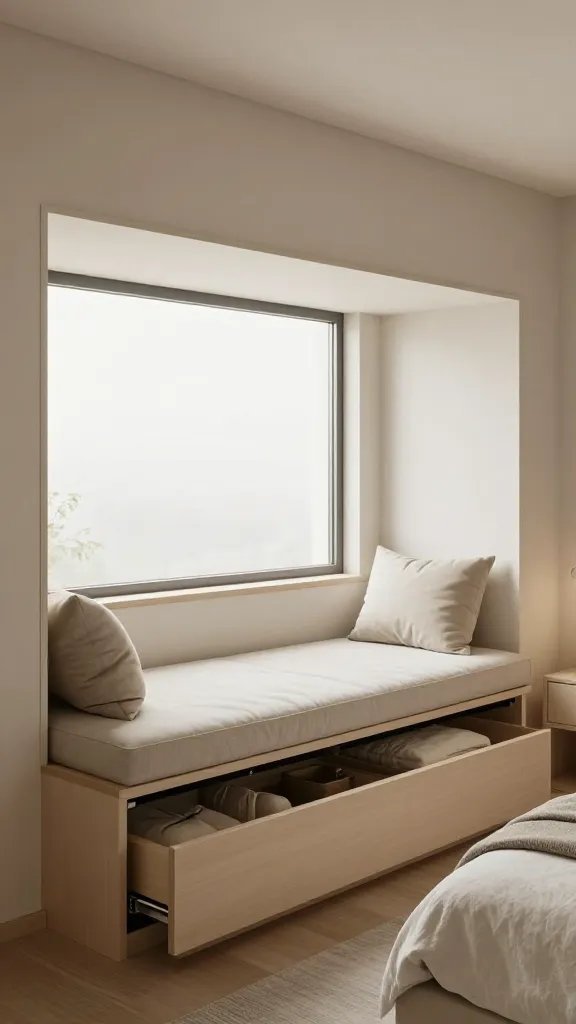
Create a window seat that doubles as storage and a cozy reading nook. Use a cushioned bench with hinged lift storage, a couple of cushions, and a slim, long cushion along the wall. It invites lounging and offers a spot for extras like seasonal totes or spare linens.
Why This Layout Works
Window seats create a natural focal point and invite relaxation. The seating aligns with the natural light in the room, making the space feel brighter and more upscale.
Space-Expanding Color Palette
Soft neutrals with sunlit touches on the cushions boost the sense of warmth. A pale blue or blush accent can echo the outdoor light while staying subtle.
Space-Saving Furniture
Choose a slim bench with a hinged top for storage. Keep the seat height low so it does not visually compress the room.
Storage and Decor Strategy
Hidden storage under the seat keeps the area tidy. Add a small tray on the sill for daytime decor that doubles as a catchall for daily items.
Budget-Friendly Space Upgrade
Reupholster an existing bench or swap the cushion fabric to lift the look without a full replacement.
Small-Space Designer Insight
Align the seat with the window frame to emphasize length and light. The seat should feel integrated, not tacked on.
Who this concept suits: rooms with a generous window or a sunny corner that deserves its own cozy retreat.
8. Mirror-Heavy Wardrobe Wall
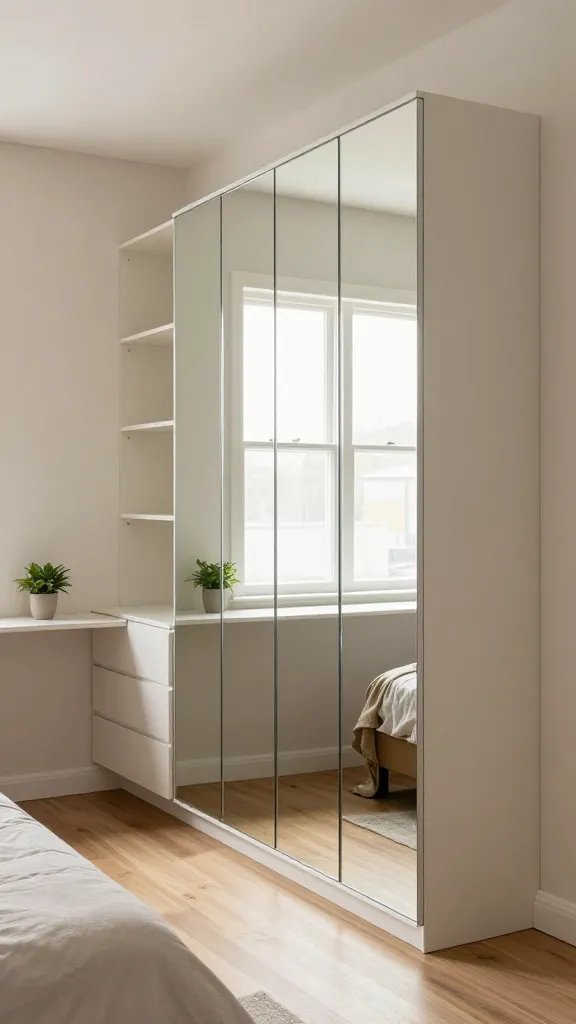
A wardrobe wall with large mirrors bounces light and visually expands a narrow space. Choose a wardrobe with frameless or thin-frame mirrors and pair it with a slim dresser and open shelving that keep the room balanced.
Why This Layout Works
Mirrors extend sightlines and reflect natural light, making narrow rooms feel wider. The reflective surface also adds a touch of glamour without heavy furniture weight.
Space-Expanding Color Palette
Neutral walls with the reflective surfaces acting as the accent color shift the focus away from wall color and toward light and shine.
Space-Saving Furniture
A wardrobe with built-in mirrors reduces the need for a separate mirror, saving wall space and avoiding extra frames cluttering the room.
Storage and Decor Strategy
Keep the interior of the wardrobe organized with clear containers or color-coordinated boxes to maintain a calm external look. Let the mirrors do the heavy lifting for light and space.
Budget-Friendly Space Upgrade
Apply mirror adhesive panels to the interior of a closet door or on the wardrobe doors themselves for an inexpensive, high-impact effect.
Small-Space Designer Insight
Be mindful of glare and privacy. If the mirror faces the bed, balance with softer textiles to avoid a disco vibe at night.
Who this concept suits: bedrooms needing maximum light reflection and a sleek, modern wardrobe solution.
9. Compact Seating Nook with Hidden Storage
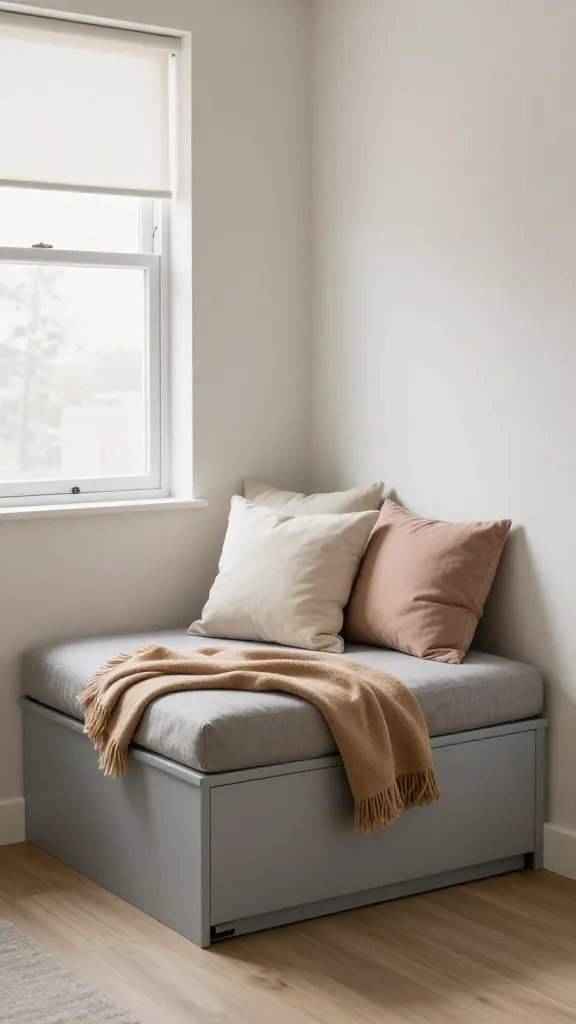
Install a compact built-in seating nook by a window or along a short wall. A cushioned bench with lift-top storage keeps seating and storage in one tidy unit, plus the corner remains visually calm.
Why This Layout Works
A seating nook introduces a dedicated relaxation zone without crowding the room. The hidden storage eliminates clutter while keeping daily routines smooth.
Space-Expanding Color Palette
Choose a cool neutral for the bench with warm textiles to create contrast and interest that doesn’t overpower the space.
Space-Saving Furniture
A narrow bench with short depth prioritizes comfort and allows more floor area for movement around the bed.
Storage and Decor Strategy
Line the bench with a couple of blankets and a small throw pillow. Use a slim shelf above for books or a plant to add personality without creating bulk.
Budget-Friendly Space Upgrade
Reupholster an old bench with a durable fabric and add simple cushions for a refreshed look that feels like a new piece.
Small-Space Designer Insight
Keep the bench narrow so it does not interrupt the flow between the bed and entry. The seat should feel like a deliberate pause in the room, not a heavy anchor.
Who this concept suits: rooms that need a cozy perch for reading or dressing with extra storage hidden away.
More Beautiful Home Ideas
10 Small Bedroom Decor Ideas for Women That Feel Chic and Cozy You’Ll Love
12 Cute Bedroom Decor Ideas for Small Spaces You’Ll Want to Copy
21 Cozy Small Bedroom Decor Ideas That Feel Warm Without Feeling Crowded: Tiny Space Glow
19 Teen Bedroom Decor Ideas for Small Rooms That Feel Fun and Personal: Tiny Space, Big Vibes
10. Vertical Garden Wall for Texture and Calm
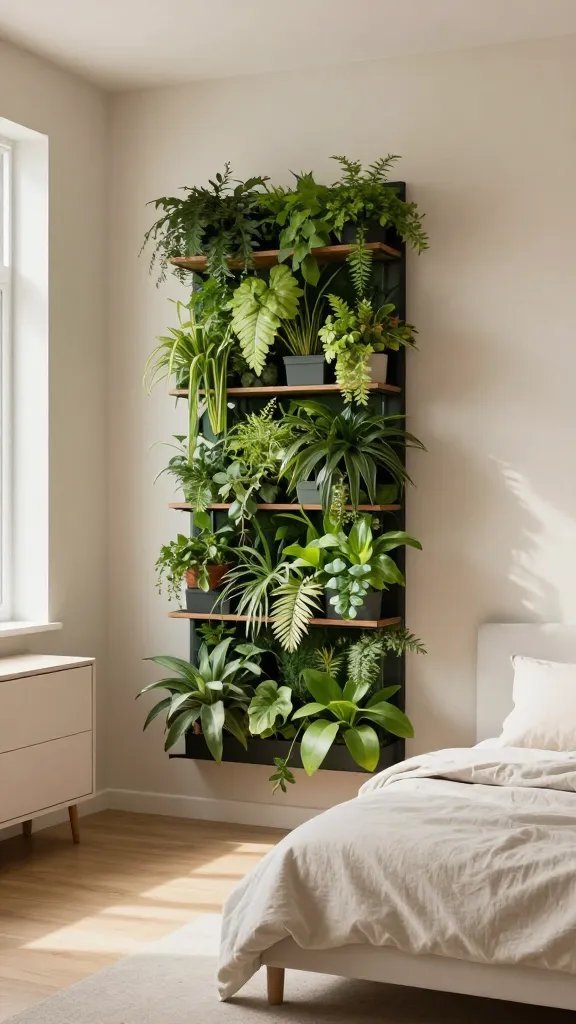
A vertical garden wall uses shelves and planters to bring life into a compact space. A tall, slim stack of plant shelves or a mounted planter system keeps greenery within reach while maintaining a clean line on the wall.
Why This Layout Works
Organic texture adds depth and softness to a small room. Plants soften edges, reduce noise perception, and bring a sense of calm that helps you unwind at the end of the day.
Space-Expanding Color Palette
Natural greens against a neutral backdrop create a fresh, airy feel. Limit the color variety to keep the space cohesive and uncluttered.
Space-Saving Furniture
Use slim shelving units with open backs to maintain airiness and avoid heavy furniture blocking sightlines.
Storage and Decor Strategy
Incorporate small planters and trailing vines to draw the eye upward, reducing the perception of cramped space. A few decorative pots in ceramic tones can act as design anchors.
Budget-Friendly Space Upgrade
Start with a few hanging planters or a single vertical planter and expand over time as desired. It’s a flexible, affordable way to add life to the room.
Small-Space Designer Insight
Keep planters lighter and avoid overpowering the wall with too many greens. The goal is texture and serenity, not a jungle of leaves.
Who this concept suits: plant lovers who want a touch of nature without giving up wall space to bulky furniture.
11. Ceiling-Mounted Lighting Play
Rethink the lighting to create depth and warmth without adding clutter. Use ceiling-mounted fixtures, wall sconces, and a couple of compact table lamps to layer light. Dimmer controls can help you switch moods from bright daytime to cozy evening.
Why This Layout Works
Layered lighting opens up a small room and helps define zones without relying on bulky lamps or heavy furniture. It also creates the illusion of height by drawing attention upward.
Space-Expanding Color Palette
Neutral walls allow the warm glow of lighting to play on the surfaces. A touch of metallic or warm wood in fixtures adds subtle sophistication without overpowering the space.
Space-Saving Furniture
Cash in on built-in features like wall-mounted fixtures rather than tabletop lamps. This keeps surfaces free and the room uncluttered.
Storage and Decor Strategy
Invisible wiring and concealed connections keep the space tidy. Avoid cords and cables that trail across the floor where they could snag or clutter the room visually.
Budget-Friendly Space Upgrade
Replace a bulky overhead light with a sleek fixture that integrates with wall sconces. It updates the room feel at a modest cost.
Small-Space Designer Insight
Light placement matters as much as light quantity. Aim for a balance of ambient, task, and accent lighting to sculpt the room’s shapes and lines.
Who this concept suits: bedrooms with limited natural light or rooms needing a warm, evenly lit atmosphere without heavy lamps.
Common Mistakes With Small Room Decor
Overstuffed furniture dominates the floor
Why it’s a problem: big pieces consume visual and functional space, making the room feel cramped and heavy. How to fix it: choose pieces with slim profiles and consider multipurpose items that maximize storage without bulk.
Blocking sightlines with too many surfaces
Why it’s a problem: frequent visual interruption breaks the sense of openness. How to fix it: maintain clean, simple lines and reduce the number of decor pieces on any single wall.
Ignoring vertical space
Why it’s a problem: neglecting walls wastes potential storage and architectural impact. How to fix it: add tall shelving, floating storage, and wall-mounted lighting to draw the eye upward.
Too many competing colors
Why it’s a problem: a busy palette can feel chaotic in a small space. How to fix it: limit to a main color with one or two accents that repeat across textiles and decor.
Insufficient lighting layers
Why it’s a problem: a single overhead light often leaves corners dark and corners feel smaller. How to fix it: layer lighting with two or three sources at different heights and use warm temperatures to soften the space.
Budget-Friendly Small-Room Decor Tips
Rearrange Before You Buy Anything New
Experiment with placement of your bed, storage, and seating to unlock new layouts without spending a dime.
Take Simple Storage Up the Wall
Install shallow wall-mounted storage to free floor space while keeping essentials within reach.
Use One Large Mirror Instead of Several Small Accents
A single large mirror expands the room more effectively than several tiny ones and reflects light beautifully.
Opt for Multi-Functional Surfaces
Choose a bench or ottoman that offers hidden storage and a resting surface to reduce clutter.
Use Peel-and-Stick Treatments for Quick Refreshes
A new wall treatment or patterned wall panel can dramatically change the room’s feel without a full repaint.
Small-Space Designer Tips
Protect the Main Walking Path
Keep pathways clear by ensuring furniture does not protrude into the central zone and maintain at least 2.0 to 2.5 feet of clearance around the bed.
Match Furniture Depth to the Available Floor Space
Choose pieces with a depth that fits the room’s proportional width to avoid crowding the center.
Use Vertical Lines to Draw the Eye Upward
Incorporate tall, slim pieces to create a perception of height and openness.
Optimize Curtain Placement
Hang curtains close to the ceiling to create the illusion of higher ceilings and larger windows.
Rug Proportions that Ground the Room
Pick a rug that fits under the bed and extends beyond it, providing a soft transition that anchors the space without swallowing it.
FAQs About Small Room Decor for a Small Bedroom That Feels Clean and Cozy
How can I make a small bedroom look bigger without moving furniture?
Focus on color continuity, plenty of light, and uncluttered surfaces. Use light neutrals on walls, and add a few reflective or light-friendly surfaces like a mirror or glossy finish on one piece of furniture to bounce light around.
What is the best bed size for a very small room?
A full or queen can work in a small room if you optimize the rest of the layout. In ultra-tight spaces, a twin or a platform bed with built-in storage can maximize floor space.
Which colors make small rooms feel larger?
Bright whites and soft neutrals create air and openness. You can also use cool tones like soft blues or greens as long as you balance them with warm textures and adequate lighting.
How do I store clothes in a tiny bedroom?
Use a compact wardrobe with sliding doors, build-in drawers, or a tall dresser with deep drawers. Consider a floating closet system or wall-mounted rails to keep floor space clear.
Is it okay to use dark colors in a small room?
Yes, but use them strategically. Dark accents can ground a room or create a focal point if balanced with plenty of light and open spaces elsewhere.
Should I use mirrors in a small bedroom?
Mewing mirrors can help reflect light and enlarge the sense of space, but avoid overdoing it. One large mirror or a single, strategically placed wall mirror is usually enough.
How high should curtains be hung in a small bedroom?
Hang curtains close to the ceiling and just above the window frame to visually extend the height of the room and maximize natural light when open.
Final Thoughts on Simple Room Decor for a Small Bedroom
Small spaces thrive on a deliberate balance of form and function. When you plan with intention, the room becomes more than just a place to sleep — it earns its calm, cozy vibe through clean lines, thoughtful storage, and light that feels almost architectural. The ideas above show that you don’t need a big footprint to create a welcoming retreat that looks polished and lives well.