How to Organize Cleaning Supplies: 17 Smart Ideas for a Clutter-Free Home You’Ll Love

As an Amazon Associate I earn from qualifying purchases.
Keeping cleaning products organized can make household chores easier and less stressful. Learning how to organize cleaning supplies can help you save space, find products quickly, and keep your home storage areas neat.
Start by grouping similar items, such as bathroom cleaners, kitchen products, laundry supplies, and dusting tools. Use baskets, clear bins, shelf organizers, and labeled containers to keep everything easy to find. A slim rolling cart can hold frequently used products, while hooks can keep brushes, gloves, and dusters off the floor. Store cleaning supplies in one dedicated area when possible to make your routine more efficient.
In this article, you’ll discover practical tips on how to organize cleaning supplies and create a tidy, functional storage area.
Why How to Organize Cleaning Supplies Works
When cleaning supplies are thoughtfully organized, everyday tasks become smoother and less stressful. Proper storage helps you reach what you need without knocking over bottles or kneeling on the floor to retrieve a spray. Matching storage to real habits reduces the temptation to DIY a quick, temporary mess that becomes permanent.
Having a clear layout that separates cleaning zones from other activities improves movement and accessibility. Balanced hidden and open storage keeps supplies out of sight when not in use but easy to grab when needed. Plus, a cohesive system—where labels, containers, and shelving align with your color palette—feels calm and effortless to maintain.
1. Built-in Cleaning Nook With Hidden Compartments
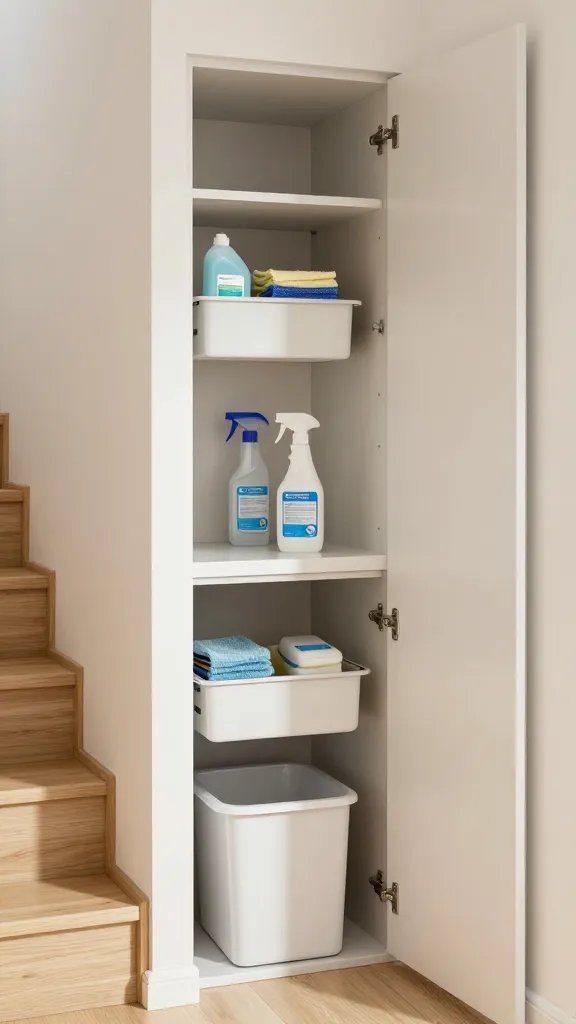
In a narrow laundry closet or understair alcove, create a compact built-in nook with shallow shelves and a slim pull-out bin for rags and wipes. A dedicated spray bottle slot and a pull-out trash bin keep surfaces clear while a small counter serves as a quick prep area for mixing solutions. The overall look stays streamlined and integrated with the home’s architecture.
Why This Setup Works
This design focuses on minimizing reaching and bending by placing the most used items at chest to knee height. It creates a single workflow zone so cleaning rituals feel intentional rather than scattered across cabinets and baskets.
Color and Visual Balance
Choose a cohesive palette that blends with adjacent cabinetry or walls—soft gray, warm taupe, or a muted blue. A uniform cabinet color or built-in paneling makes the space disappear visually, reducing clutter even when supplies are visible.
Furniture and Layout Strategy
Use a low, wall-hung cabinet with a shallow depth and a pull-out tray for easy access. If space is really tight, consider a floor-to-ceiling cabinet with a slim interior drawer system. The goal is to maximize storage without crowding the room.
Smart Storage and Decor
Incorporate labeled bins, a small peg rail for brushes, and a hidden charging or clip area for cordless tools. Decorative plant nearby can soften the utilitarian feel, while a framed mirror on the door reflects light and makes the tiny space feel bigger.
Budget-Friendly Organization Upgrade
Repurpose a shallow dresser or old cabinet with new runners to create a dedicated cleaning cabinet. Add inexpensive contact paper to the interior to aid in quick identification of items and keep things visually organized.
Functional Designer Insight
Keep heavy bottles at the back or bottom to lower the center of gravity and reduce tipping. A consistent insert system prevents items from sliding when the door opens, improving daily use.
This setup works well in households that value a tucked away, single-cleaning zone while still needing quick access to common products in a compact footprint.
Keep Exploring
15 Corner Wall Decorating Ideas to Transform an Awkward Empty Space: Tiny Space, Big Impact
How to Organize Toiletries in a Bathroom: 10 Easy Storage Ideas for Calm
How to Organize Your Bathroom Counter: 10 Clutter-Free Ideas for a Spa Pause
How to Organize Clothes in a Closet: 10 Simple Organization Ideas That Work
2. Wall-Mounted Cleaning Caddy With Peg Rail
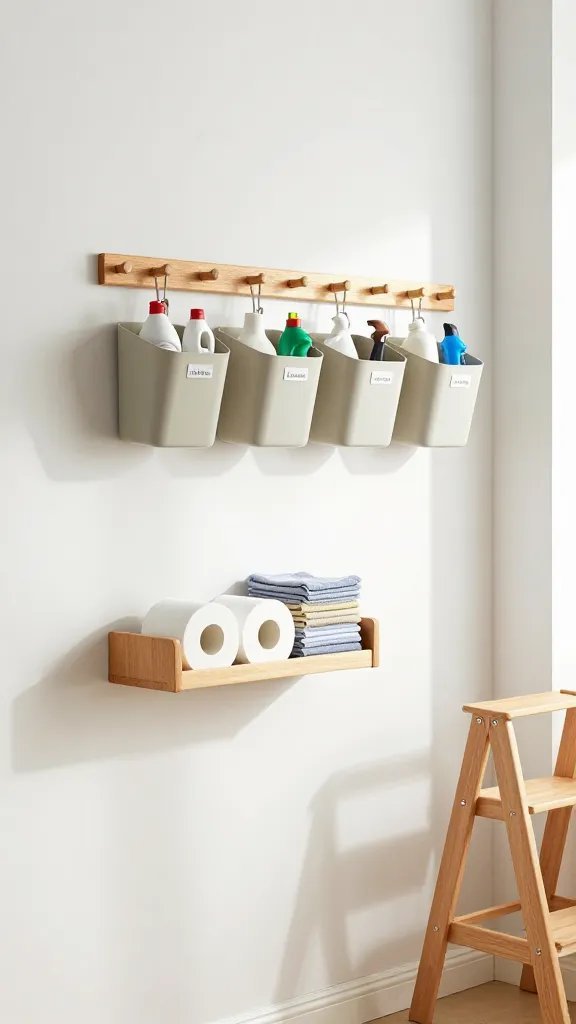
Install a wall mounted cleaning caddy above eye level with a peg rail across the top. Use baskets or bins that hang from the rail for frequent items and reserve a small shelf for spare rolls and microfiber cloths. The vertical display keeps everything off the counter and makes the space feel taller and neater.
Why This Setup Works
Vertical storage adds valuable surface area while keeping frequently used items within easy reach. The peg rail allows you to rearrange items as your cleaning routine evolves.
Color and Visual Balance
Pick a single accent color for baskets and hardware to unify the look. A bold accent against a neutral wall draws the eye upward, making the space feel intentional rather than cluttered.
Furniture and Layout Strategy
Place the rail at a height that minimizes bending but is still reachable from a standing position. The caddy below should be slim but deep enough for two to three tools per hook or basket.
Smart Storage and Decor
Include a small chalkboard or label tags on the baskets so you can easily identify contents. A metal finish on hooks or brackets adds a designer touch while keeping a clean industrial vibe.
Budget-Friendly Organization Upgrade
Use inexpensive pegboard and paintable peg hooks. Reorganize your current tools by repositioning for function, not just aesthetics.
Functional Designer Insight
Balance open storage with closed options so everyday items are visible but not overwhelming. Regularly reassess what truly gets used to avoid piling up detection clutter.
This idea is ideal for smaller kitchens or utility walls where open vertical storage can replace bulky cupboards yet still feel stylish.
3. Drawer-First Organization With Dividers
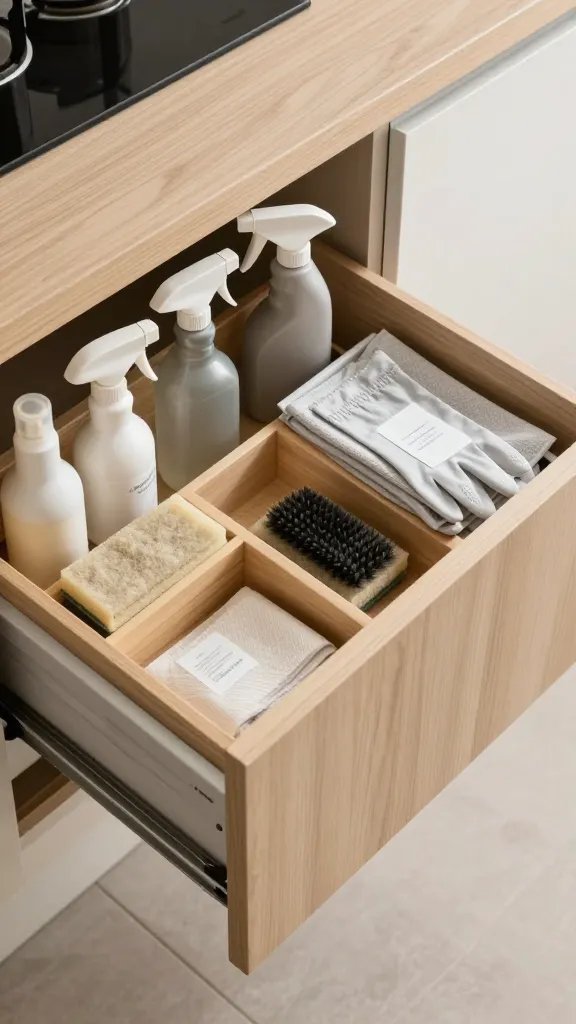
Transform a shallow kitchen or bathroom drawer into a smart cleaning command center. Install adjustable dividers for slotted spray bottles, sponges, cloths, and small brushes. A shallow tray on top stores spare labels, gloves, and microfleece cloths.
Why This Setup Works
By concentrating items in one drawer, you reduce surface clutter and make clean up faster. Dividers keep items immovable during use and prevent spillovers into adjacent compartments.
Color and Visual Balance
Choose neutral dividers in clear or frosted acrylic so the contents remain legible without looking busy. If your drawer interior is wooden, a light finish can keep the look cohesive with surrounding cabinetry.
Furniture and Layout Strategy
Keep this drawer in the primary cleaning zone of the kitchen or bath where you perform most tasks. The surrounding cabinetry should be tall enough to minimize bulk under the sink and at floor level.
Smart Storage and Decor
Use transparent containers for visibility and a couple of decorative trays for a spa-like feel. Small labels help family members find what they need quickly without opening multiple bins.
Budget-Friendly Organization Upgrade
Audit the drawer and remove items that aren’t used regularly. Use repurposed plastic containers from other areas of the home to reduce purchases and waste.
Functional Designer Insight
Consider depth and clearance: too deep a drawer hides items and slows routine; too shallow and you can’t fit multiple products. A tray on the top helps separate daily items from backups.
This approach is great for anyone who wants a high functioning, calm drawer that still looks tidy and intentional.
4. Corridor Pantry With Narrow Shelves
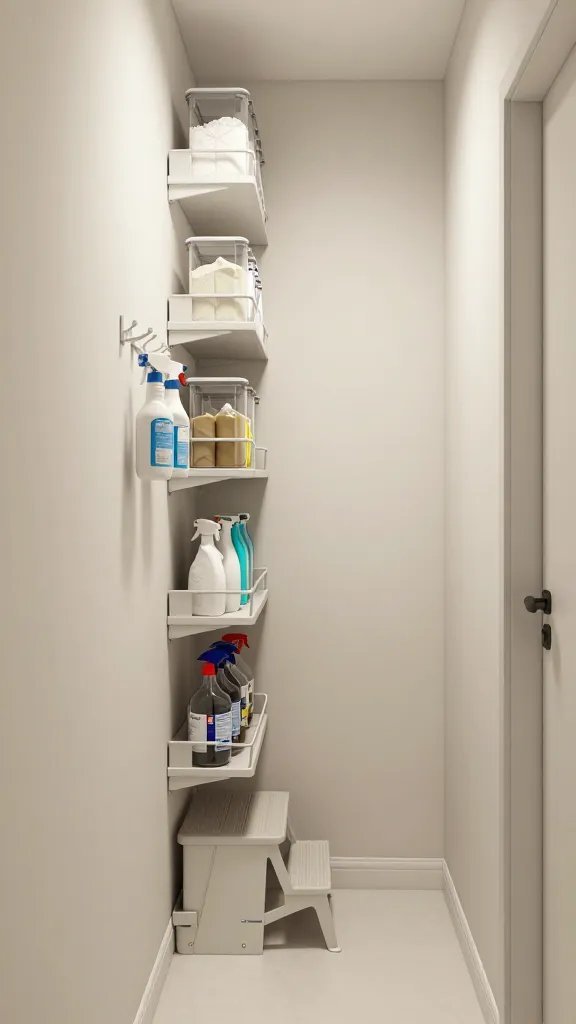
If you have a long, narrow wall or hallway, install slim adjustable shelves to create a micro pantry dedicated to cleaning supplies. Use airtight containers for powders and liquids, and a couple of wall mounted hooks for spray bottles. A small step stool tucked under a shelf makes above-reach items accessible without crowding the floor.
Why This Setup Works
Maximizing vertical space in a narrow footprint creates an organized flow without blocking the corridor. It also keeps all cleaning items in one visible, curated zone.
Color and Visual Balance
Mix wood and metal finishes with soft wall color to foster a balanced, airy feel. Keep the color palette cohesive across baskets and containers to maintain calmness in a narrow space.
Furniture and Layout Strategy
Use adjustable shelves to tailor heights for spray bottles, cleaners, and cloths. A slim freestanding cabinet at the end provides a discrete place for bulky items you don’t use daily.
Smart Storage and Decor
Label every shelf and use uniform jars for powders. A small framed quote or art piece at the end can give the narrow space personality while remaining uncluttered.
Budget-Friendly Organization Upgrade
Repurpose a shallow cabinet or old bookcase with adjustable shelves. Use inexpensive liners to make containers easier to slide in and out and to protect surfaces.
Functional Designer Insight
Think about your daily routine: where do you stand when you clean? Position shelves to align with that motion to minimize bending and reaching.
This solution suits homes with tight storage or irregular hallway dimensions, turning a transit path into a purposeful cleaning station.
5. Under-Sink Zone With Pull-Out Drawers
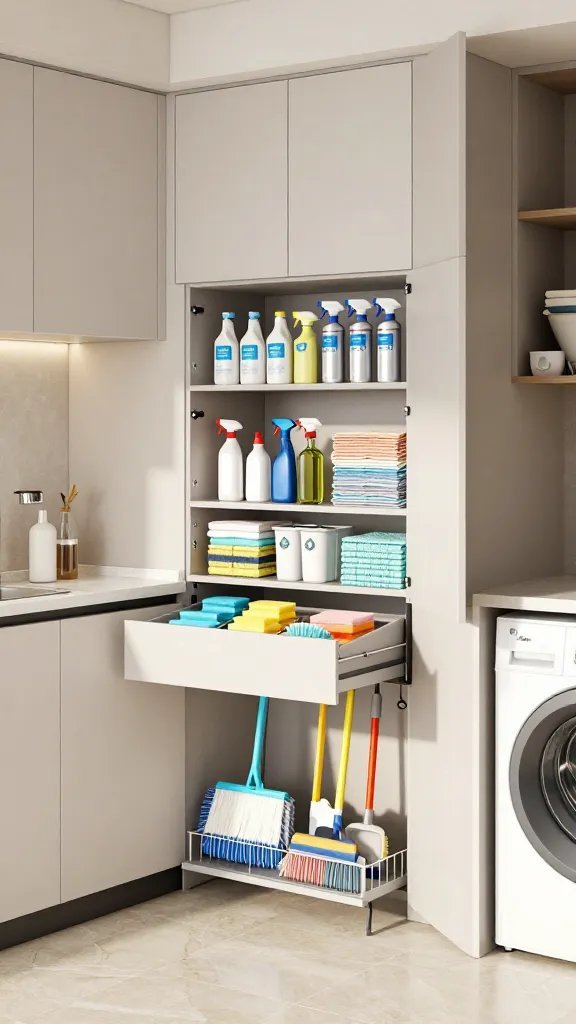
Under the sink is a notorious clutter hotspot. Install pull-out drawers and a slim caddy for brushes, gloves, and small bottles. Use a moisture barrier and stackable bins to keep everything organized and dry, while a small lighting strip ensures you can see what you’re grabbing.
Why This Setup Works
Pull-out drawers exploit vertical space and reduce the need to rummage through deep cabinet corners. A dedicated moisture barrier protects supplies and extends their life.
Color and Visual Balance
Choose a color that matches the cabinet interior to create a seamless look, or go with a slightly darker shade to help stains and moisture ideas disappear visually behind the bins.
Furniture and Layout Strategy
Use slim, deep drawers with wheels for easy access. A compact organizer in the back can hold spare caps, labels, and replacement parts without crowding the front.
Smart Storage and Decor
Clear containers with white labels maintain readability. A small, durable tray on the front can catch leaks and keep the area clean and organized.
Budget-Friendly Organization Upgrade
Rearrange what you already own in the cabinet, and add a couple of inexpensive drawer dividers or bins you already have at home. You can often make a big difference without buying new items.
Functional Designer Insight
Depth matters here: too shallow and tall items tip; too deep and you lose sight of what you have. A transparent, uniform system helps keep daily use quick and simple.
This under-sink strategy is ideal when plumbing limits cabinet shape but you still want fast access to daily cleaning supplies.
Common Mistakes With How to Organize Cleaning Supplies
Adding Storage Without Removing Unneeded Items
Stacks of unused cleaners and duplicate bottles create a bigger mess than you started with. Regularly purge items that are expired or rarely used, and keep only what you truly need.
Keeping Everyday Items Too Hard to Reach
When daily essentials are stored far back or high up, you grab what’s convenient rather than what’s best. Reposition frequently used items at eye level for quick access.
Using Too Much Open Storage
Open baskets and shelves reveal every bottle and spill. Mix open and closed storage to protect surfaces while keeping everyday items visible enough to grab quickly.
Ignoring Empty Vertical Space
Vertical walls, backs of doors, and tall corners are often wasted. Install hooks, rails, or slim shelves to make those surfaces serve you instead of collect dust.
Choosing Containers Before Measuring the Area
Buying oversized or ill fitting containers leads to wasted space and messy corners. Measure thoroughly and choose containers that truly fit your shelves and drawers.
Budget-Friendly How to Organize Cleaning Supplies Tips
Reorganize What You Already Own First
Before buying anything, pull everything out and group like items. You’ll be surprised by how much you can fit with a simple rearrangement.
Use Simple Hooks to Free Up Drawer Space
Attach a few hooks on a wall or inside a cabinet door to hold spray bottles or gloves. It’s a quick, inexpensive upgrade that pays off daily.
Turn Existing Furniture Into Double-Duty Storage
Repurpose a small chest or a sturdy crate as a cleaning station with a lid and a tray for daily items. It adds character while delivering practical storage.
Label Containers for Quick Identification
Labels reduce the time spent hunting for items and help family members put things back in the right place.
Paint or Line Shelves for a Fresh Look
A light refresh with paint or shelf liner can make your storage feel organized and new without a big investment.
Functional Designer Tips
Keep Daily Essentials Within Easy Reach
Place the items you reach most often in front or at a comfortable height. This reduces bending and searching during busy cleaning sessions.
Use Closed Storage for Visually Busy Items
Conceal bottles and sprays within cabinet doors or baskets to keep the area looking calm and intentional.
Protect Clear Walking Paths Around Storage Pieces
Ensure there is enough clearance to move and pivot when washing or mopping. Avoid placing tall storage where it blocks door openings or creates bottlenecks.
Balance Texture and Color
Choose finishes and materials that reflect light and create a cohesive feel with the room, so storage looks intentional rather than utilitarian.
Anticipate Daily Routines
Organize around how you actually clean each day, not how you wish to clean. A realistic system sticks better and lasts longer.
FAQs About How to Organize Cleaning Supplies
What is the easiest way to start organizing cleaning supplies?
Begin with a quick audit, clear a dedicated space, and sort items into keep, donate, and discard piles. Then design a simple layout that places daily items at arm’s reach.
How can I organize a small cleaning closet effectively?
Use vertical storage, slim shelves, and door organizers to maximize every inch. Keep backups in a separate bin or basket to reduce surface clutter.
Should I mix cleaning products with food items?
No. Keep cleaning supplies away from food zones to avoid accidental contamination and make each task safer and easier.
What about labeling and color coding?
Labels help everyone return items correctly. Color coding reduces search time and makes situations like spill cleanup quicker and calmer.
How can I maintain organization long term?
Schedule a quarterly check to remove expired items, rotate backups, and adjust the layout as your routines change. A simple habit is to return items to their designated home immediately after use.
Final Thoughts How To Organize Cleaning Supplies
Organizing cleaning supplies is less about buying more bins and more about designing spaces that fit how you actually use them. By creating purposeful zones, balancing hidden and open storage, and selecting furniture and hardware that support daily habits, you’ll achieve a clutter-free home that still feels warm and stylish. Start with one small change today, like rethinking the under-sink area or adding a single vertical rail, and you’ll notice how much easier everyday cleaning becomes.