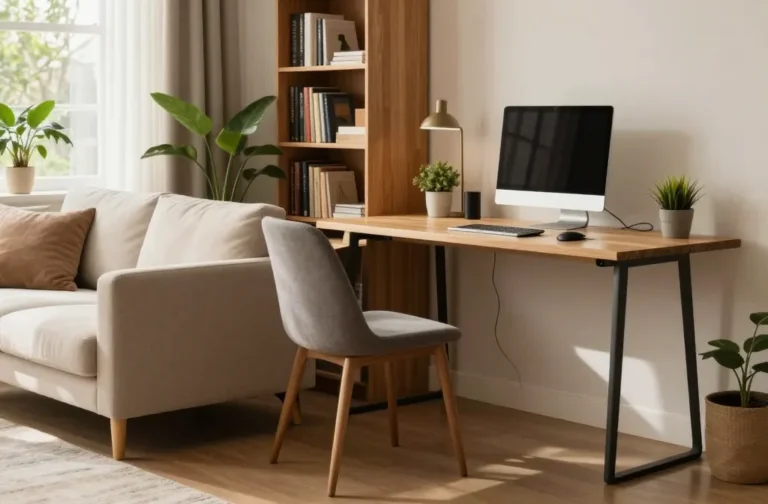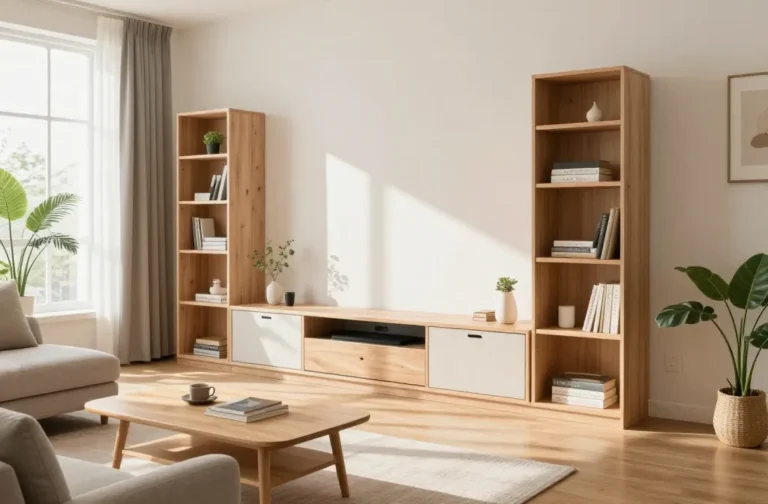
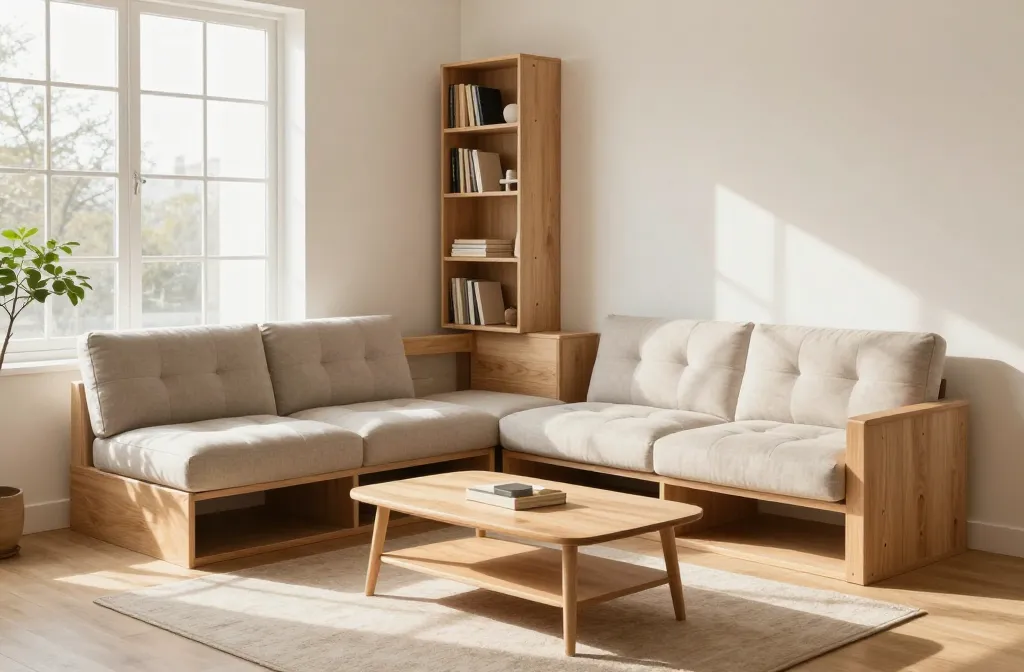
14 Small Living Room Makeover Ideas That Make a Big Difference

A small living room can look fresh, stylish, and comfortable with a few simple changes. The right small living room makeover ideas can help you transform your space without spending too much money or making major renovations.
Start by rearranging your furniture to improve the layout and create more walking space. Add a cozy rug, decorative cushions, and warm lighting to make the room feel inviting. A fresh coat of paint, wall art, floating shelves, or a large mirror can also make a noticeable difference. Choose multifunctional furniture and smart storage to keep clutter under control while making the most of every inch.
In this article, you’ll discover small living room makeover ideas that are affordable, practical, and easy to recreate. These simple updates can help you create a beautiful living room you’ll love
Why Small Living Room Makeovers Work
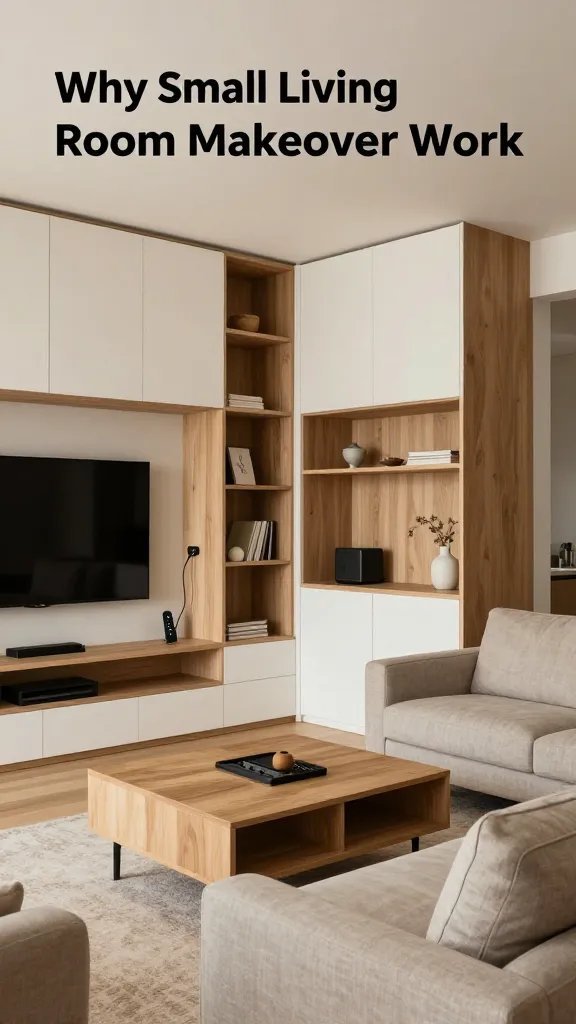
Small living rooms demand smarter organization because every inch matters. When storage is aligned with how you actually live, you spend less time searching for remotes or charging cables and more time enjoying the space. A well-planned layout reduces wasted movement, while a balanced mix of hidden and visible storage minimizes visual clutter without sacrificing personality.
Now let’s dive into 14 distinct, functional design ideas that make a big difference in a small living room without turning it into a showroom. Each solution tackles a real need while honoring style and ease of maintenance.
1. Built-in Corner Storage With Welcoming Seating
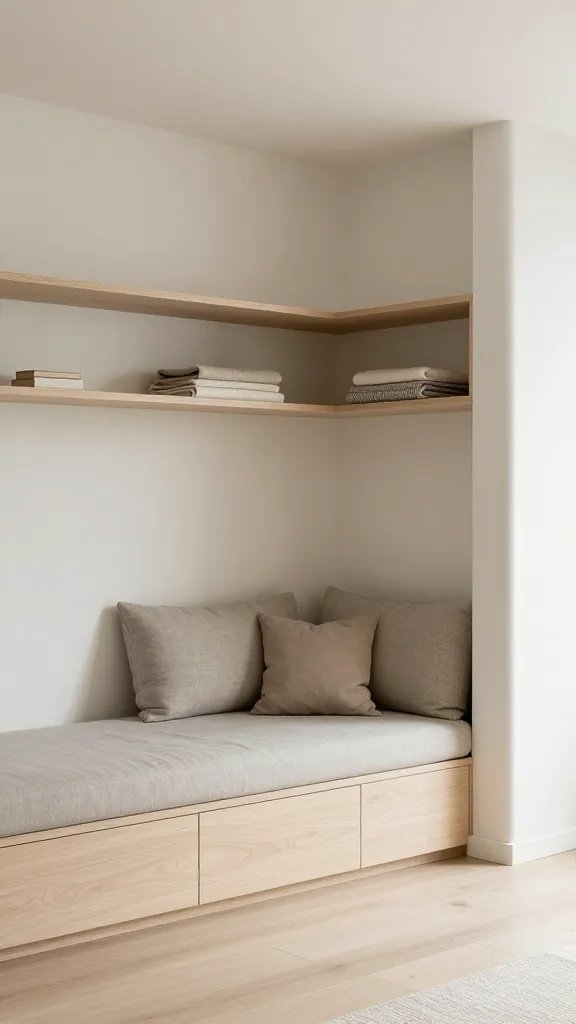
Transform an underutilized corner into a compact built-in seating nook with a slim storage cabinet along the base. A cushioned bench can hide seasonal decor or blankets, while open shelving above creates a soft display. The visual weight is balanced by a light finish and a slim back panel that frames the corner without crowding it.
Why This Setup Works
Corner storage makes use of awkward space and keeps bulky furniture away from the main traffic path. The built-in bench doubles as seating and storage, reducing the need for extra furniture while keeping the room feeling open.
Color and Visual Balance
Choose a soft, cohesive color with the bench cushion in a gentle neutral or muted accent. A light wood or white-painted cabinetry helps the corner recede visually, preventing the area from feeling heavier than necessary.
Furniture and Layout Strategy
Place the corner cabinet against the wall with the seating facing toward the room’s main seating area. Leave enough clearance for the sofa and coffee table to maintain easy passage through the space.
Smart Storage and Decor
Use labeled baskets or fabric bins in the lower cabinet to keep blankets, games, or remotes organized. Display a couple of small plants or a framed photo on the open upper shelves to soften the look.
Budget-Friendly Organization Upgrade
Repurpose a shallow bookshelf or salvage a cabinet you already own to create the built-in look. Paint it with a fresh, light color and swap in new hardware for a quick upgrade.
Functional Designer Insight
Edge-to-edge seating helps anchor the room visually and creates a comfortable, inclusive zone that invites conversation without breaking sightlines to the rest of the space.
This setup suits small living rooms that double as guest spaces or family hubs with limited wall space.
2. Open Shelving With Hidden Storage Behind Doors
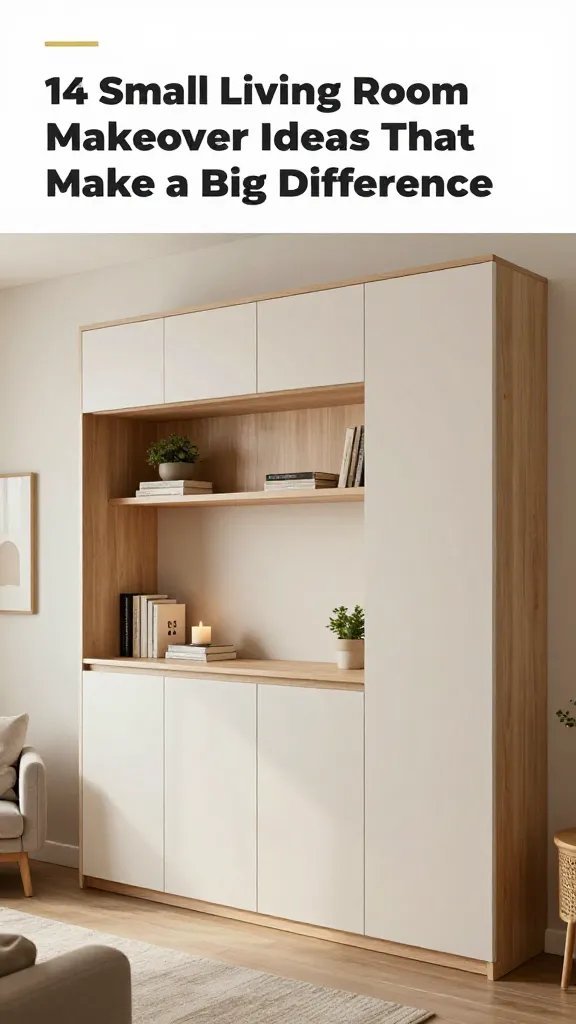
Install a shallow, open shelf on one wall for daily display items, while flanking it with slim storage cabinets behind closed doors. This keeps the top surface feeling light and airy, yet provides a place to tuck away clutter.
Why This Setup Works
Open shelves offer visual breathing room and a chance to curate decor, while hidden compartments prevent clutter from taking over. The combination creates a dynamic balance between showcasing personality and maintaining order.
Color and Visual Balance
Use a monochrome backdrop for the shelving area, and pick a few accent colors for decor items that repeat elsewhere in the room to tie the space together.
Furniture and Layout Strategy
Position shelves at eye level near the primary seating to create an approachable focal point, with cabinets flanking the sides to maintain a clean silhouette.
Smart Storage and Decor
Incorporate baskets and small boxes on the open shelves to break up the display and keep items categorized. Add a small indoor plant and one statement piece for visual interest.
Budget-Friendly Organization Upgrade
Reuse a pair of old nightstands or small cabinets as cabinet doors on the bottom to hide clutter without buying new furniture.
Functional Designer Insight
Keep the open shelves balanced with negative space; too many items creates busy negative space, which makes the room feel smaller.
This setup works well in living rooms with an emphasis on display areas and a need for practical concealment.
3. Under-Sofa Hidden Storage Drawers
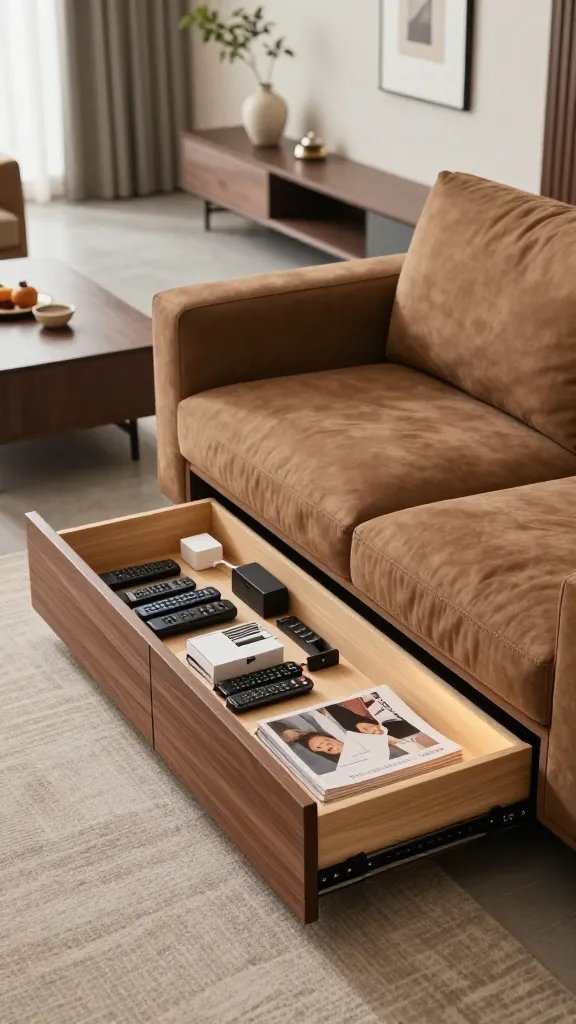
Slide-out drawers under the sofa for everyday items like remotes, chargers, and magazines. A slim profile unit can tuck in neatly and slide out when needed, helping surfaces stay clear.
Why This Setup Works
Hidden storage directly targets surface clutter, freeing coffee tables and mantles for decor rather than detritus. It also makes essentials easy to reach without diving into a closet.
Color and Visual Balance
Choose a sofa fabric in a durable, medium-toned color and pair with drawer fronts that match or compliment the sofa legs to maintain a unified look.
Furniture and Layout Strategy
Ensure enough floor clearance to pull the drawers out fully without hitting other furniture. The sofa height should align with the drawer top for comfortable access.
Smart Storage and Decor
Use the interior of the drawers for everyday items and reserve a small top pocket for quick-access items like a spare remote or charging cables.
Budget-Friendly Organization Upgrade
If new drawers aren’t an option, repurpose slim plastic bins with lids under the sofa and label them for easy retrieval.
Functional Designer Insight
Hidden storage helps maintain a clean surface while keeping items within arm’s reach, supporting daily rhythms without visual noise.
This configuration suits rooms where sofa comfort is a priority and underused space can quietly boost function.
4. Floating Media Console With Wall-Mide Display
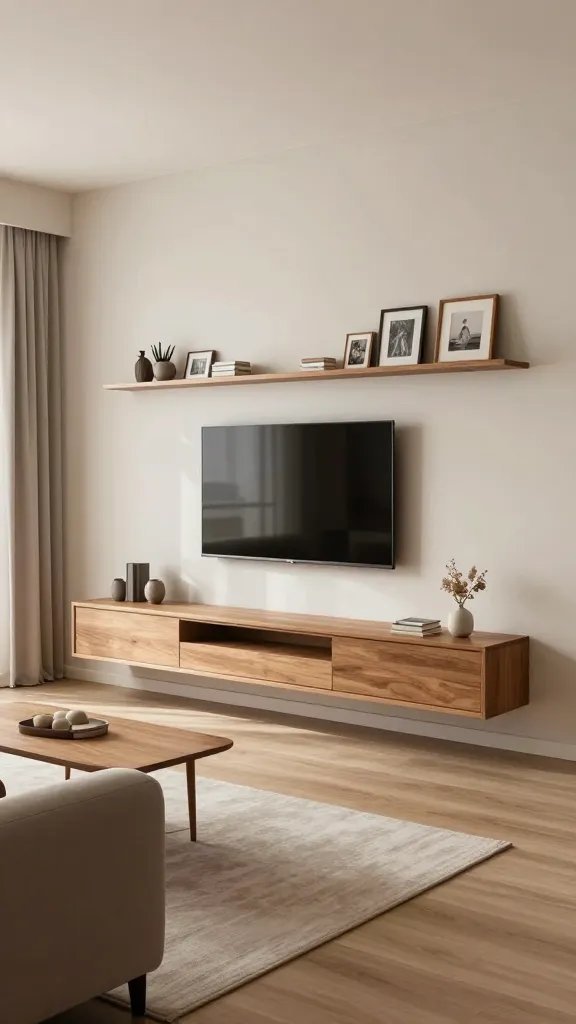
Mount a slim, floating media console and create a wall-mounted display shelf above. The floating look keeps the floor visible, which visually enlarges the room while still offering storage behind closed panels.
Why This Setup Works
Wall-mounted storage frees floor space for movement and creates the illusion of more headroom. The combination of closed panels and open display maintains a tidy look with personality.
Color and Visual Balance
Use a consistent wood tone or paint the console to blend with the wall color. A light shelf above can hold books or greenery to soften the tech-heavy area.
Furniture and Layout Strategy
Center the TV or main display on the wall, with the console below and seating arranged to face it at a comfortable distance. Leave space for a coffee table that doesn’t crowd the viewing line.
Smart Storage and Decor
Hidden storage behind cabinet doors keeps remotes, manuals, and cables out of sight. Display a few curated objects on the open shelf to create a curated gallery feel.
Budget-Friendly Organization Upgrade
Use concrete or laminate panels from a home improvement store and install them with simple brackets for a sleek, affordable look.
Functional Designer Insight
Floating storage creates a sense of openness and reduces visual weight at floor level, important in small spaces where heavy furniture can feel oppressive.
This setup suits living rooms that want a modern, airy feel without sacrificing storage for electronics and media.
5. Wall-Mounted Drop Zone By The Entrance
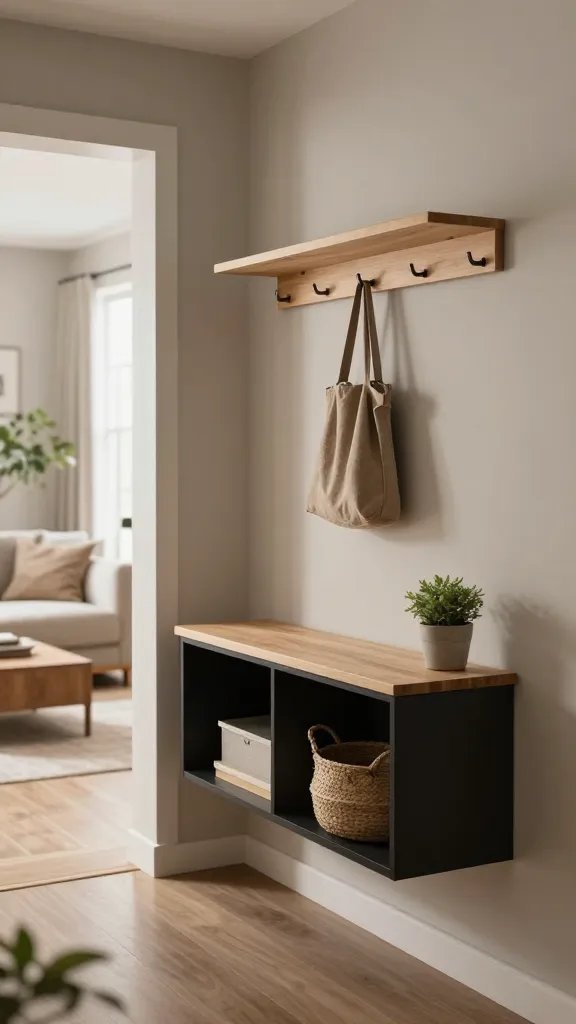
Create a small entry drop zone that flows into the living room using a wall-mounted console, a small cubby for mail, and a slim hook rail for bags and jackets. This keeps everyday items from migrating into the living area.
Why This Setup Works
A defined entry zone prevents clutter from spreading into the main living space. By keeping daily items near the door, everything has a home and is easy to put away.
Color and Visual Balance
Choose a finish that complements the living room’s color palette to ensure the entry zone reads as part of the whole rather than a separate afterthought.
Furniture and Layout Strategy
Mount the console at a comfortable height and place a small bench or stool nearby to provide seating while removing shoes. The rail hooks should be reachable without stepping into the seating area.
Smart Storage and Decor
Use labeled bins on the console for mail and keys. Add a small mirror to pull light deeper into the space and create a quick, welcoming reflection as you leave the room.
Budget-Friendly Organization Upgrade
Repurpose a slim desk or wall shelf as the drop zone and add inexpensive hooks to create a practical, fast-install solution.
Functional Designer Insight
A well-designed entry zone reduces the cognitive load of daily routines, helping you start and end the day with calm organization.
This setup is ideal for apartments or homes where the living area also serves as a general living and entry flow space.
6. Multi-Function Coffee Table With Hidden Storage
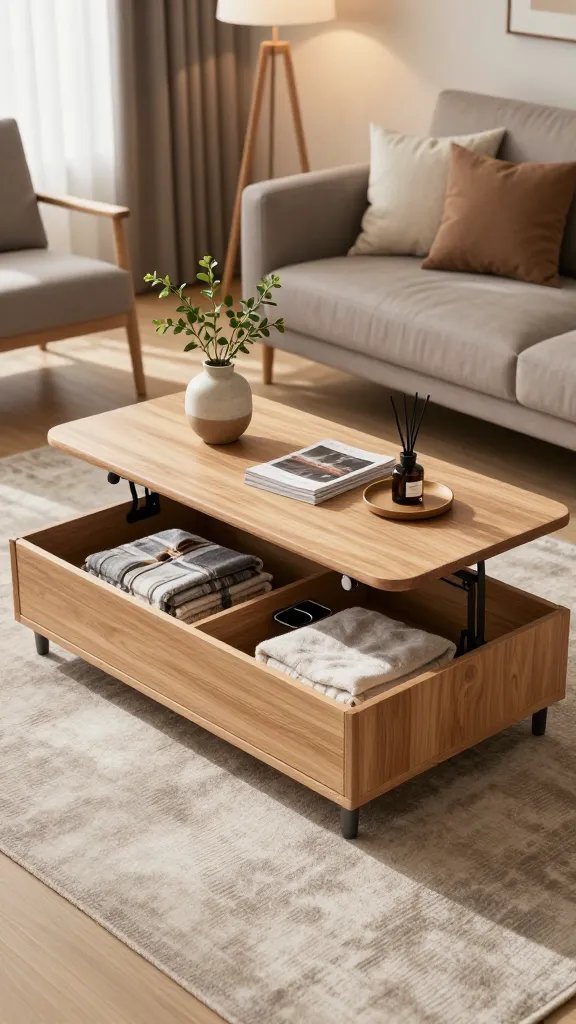
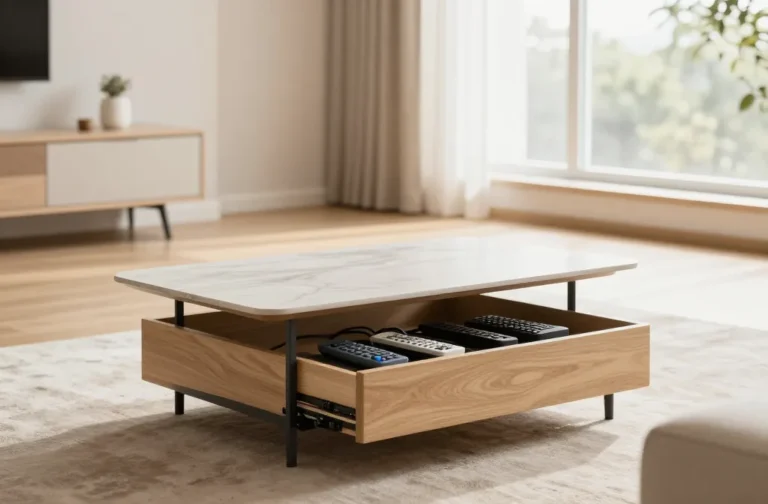
A coffee table with a lift-top or hidden compartments blends display surface with practical storage. Use the space for games, magazines, or blanket storage under the lid, and keep a few decor items on top to balance the look.
Why This Setup Works
Multipurpose tables save square footage by combining a surface, storage, and sometimes a charging station in one piece. It reduces the need for extra furniture while maintaining an organized surface.
Color and Visual Balance
Opt for a finish that matches the surrounding furniture to maintain a cohesive look. A lighter top with a darker base can create depth without visually heavy elements.
Furniture and Layout Strategy
Place the coffee table within easy reach of seating, ensuring you can open the lift-top without bumping into the sofa or chairs.
Smart Storage and Decor
Use the hidden compartment for blankets, remotes, chargers, or games. Add a few tray elements on top to corral small items and keep the surface clean.
Budget-Friendly Organization Upgrade
Refinish an existing coffee table with a fresh coat of paint or stain and install simple under-top organizers from a hardware store for improved separation of items.
Functional Designer Insight
A table that hides clutter keeps your living room looking curated, while the lift-top keeps frequently used items within easy reach.
This arrangement is great for social spaces where people linger and need both a functional surface and easy storage access.
7. Slim Media Console With Airy Open Shelving
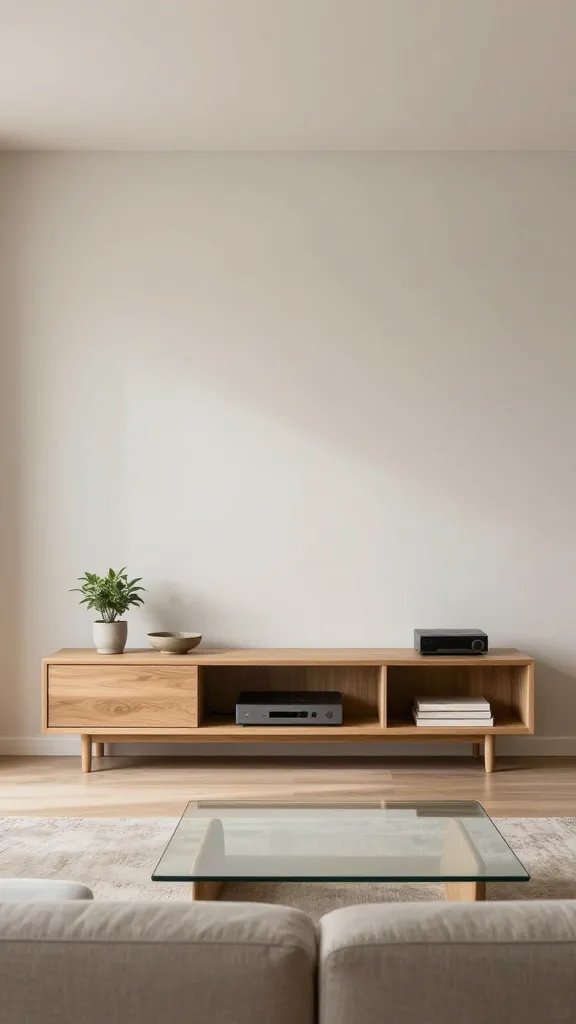
A slim media console that includes airy open shelving above a closed base helps visualize space while offering practical storage. It creates balance between display and concealment, keeping cables and devices organized.
Why This Setup Works
Airy shelves prevent heaviness on the wall while still providing a place to show a few favorites. The closed base hides the more practical storage needs like cables, adapters, and manuals.
Color and Visual Balance
Keep the console in a neutral tone and introduce color through a carefully chosen set of decor objects on the shelves to avoid visual noise.
Furniture and Layout Strategy
Position the console directly across from the seating area to create a natural focal line for TV viewing or display while maintaining ample space for walking around it.
Smart Storage and Decor
Incorporate decorative baskets or boxes on the open shelves to keep small items grouped by function and to reduce visual clutter at a distance.
Budget-Friendly Organization Upgrade
Repurpose a tall cabinet you already own as the closed base, or paint it to freshen the look while ensuring the open shelves feel intentional rather than busy.
Functional Designer Insight
Visible storage for display items should be curated; a few standout pieces are more powerful than a crowded shelf full of trinkets.
This setup works well in rooms where a slim media area is needed to keep sightlines clear and movement unrestricted.
8. Reworked Wall Niches With Hidden Compartments
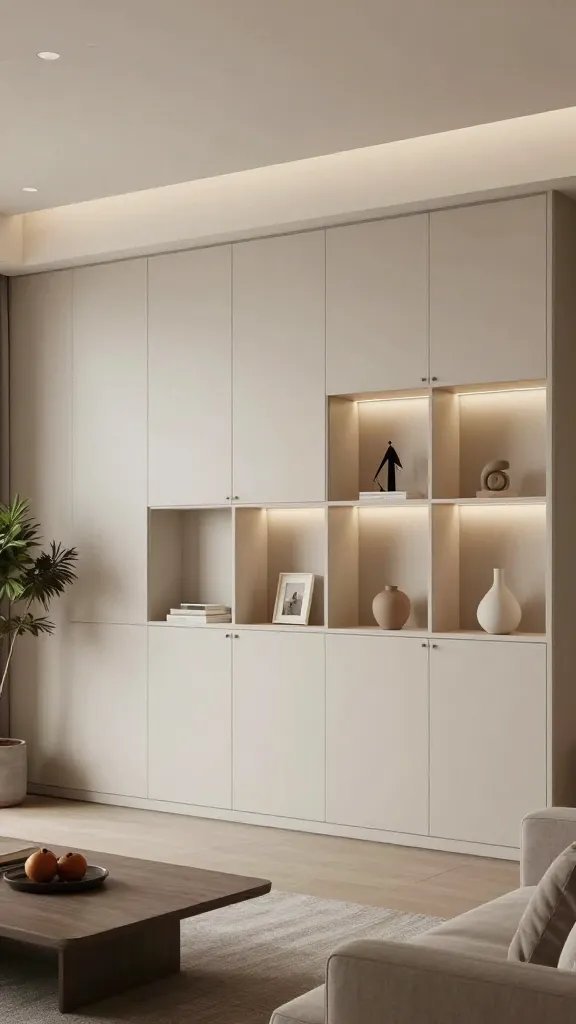
Create shallow wall niches with hidden compartments or doors to hide clutter behind a clean surface. Use LED strip lights to highlight a few favorite objects while the hidden storage beneath keeps everyday items tucked away.
Why This Setup Works
Niches add architectural charm while giving you a dedicated place to store items out of sight. Lighting elevates the look and reduces the feeling of a cluttered wall.
Color and Visual Balance
Paint the recesses in a slightly lighter shade than the surrounding wall to emphasize depth, or use a bold color for the back panel as a design moment.
Furniture and Layout Strategy
Place seating to face or align with the niches so they feel integrated as a curated gallery rather than a random wall feature.
Smart Storage and Decor
Line the hidden compartments with soft fabric or felt to protect fragile items, and use small baskets for easy accessibility inside the niches.
Budget-Friendly Organization Upgrade
Use removable drywall panels and simple hollow-core shelves to create the look without expensive remodel work.
Functional Designer Insight
Aesthetics and function can coexist with architectural features that naturally guide the eye away from clutter and toward a intentional display.
This idea is ideal in living rooms with a flat wall that could benefit from architectural interest without major construction.
9. Floor-Length Curtains To Soften Horizontal Clutter
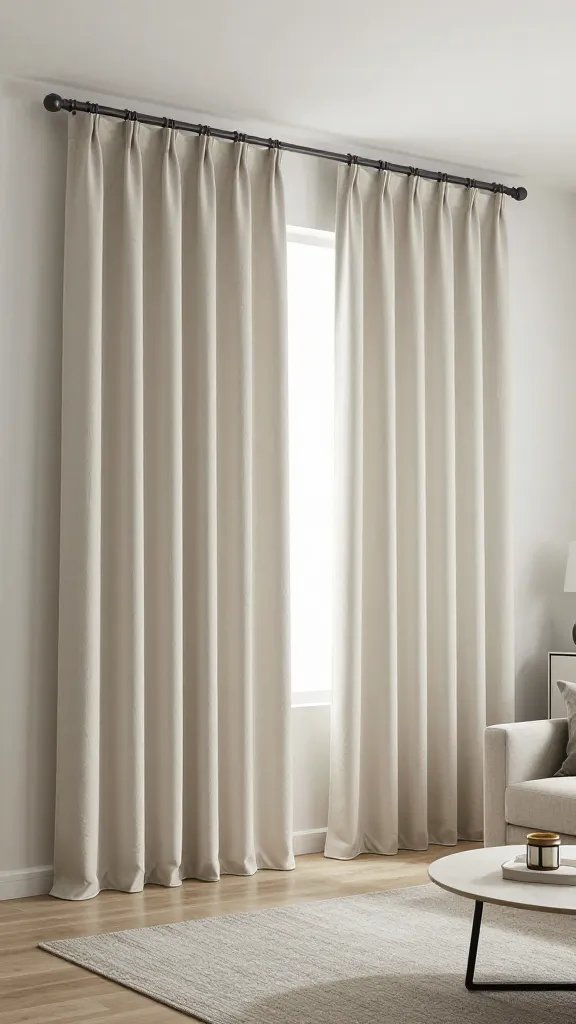
Hang floor-to-ceiling curtains to visually elongate the walls and soften the space. Pair with a simple curtain rod and clean lines to keep the room feeling larger and more organized.
Why This Setup Works
Soft fabric draws the eye up and away from clutter on shelves and surfaces. The curtains help to frame the seating area and improve acoustics at the same time.
Color and Visual Balance
Choose a color that complements the sofa and rug; lighter fabrics brighten the space, while a darker hue creates a grounded, cohesive look.
Furniture and Layout Strategy
Install the curtain rod high and wide to maximize window exposure and allow the curtains to frame the seating area when opened.
Smart Storage and Decor
Curtains don’t replace the need for storage, but they can soften a wall with open shelves and frame a display area into a more intentional vignette.
Budget-Friendly Organization Upgrade
Use ready-made, affordable drapery panels and a simple tension rod to avoid complicated curtain hardware.
Functional Designer Insight
Long curtains help visually raise the ceiling line and create a more expansive feel in a small room.
This idea suits living rooms with large windows or awkward lighting that benefits from diffusion and soft framing.
10. Vertical Plants as Living Storage Dividers
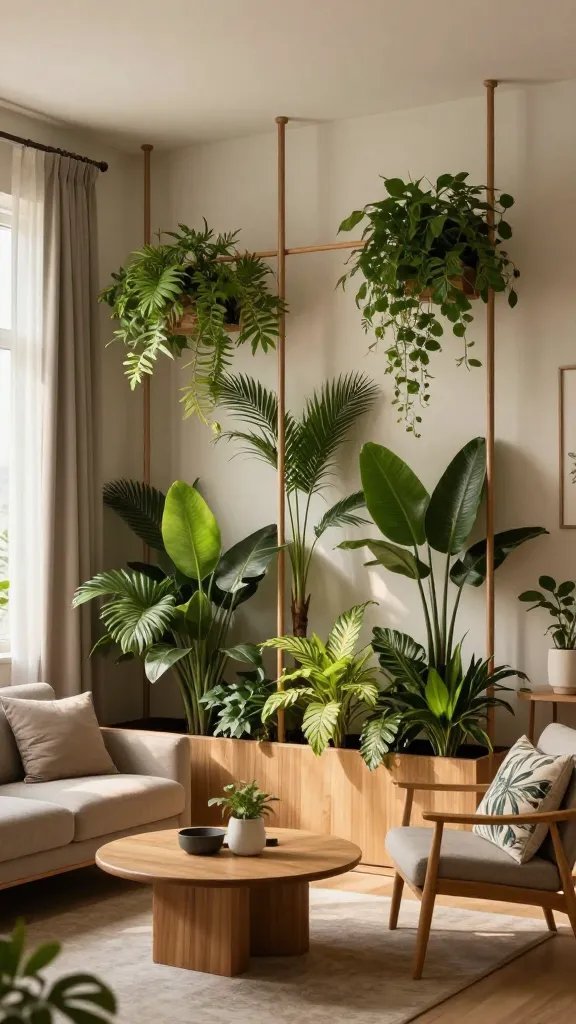
Use tall, slim planters or a vertical plant wall near the seating zone to create a green divider without erecting bulky furniture. The plants add life while subconsciously breaking up the space into zones.
Why This Setup Works
Greenery adds texture and warmth, helping the room feel more lived-in. A vertical plant wall can define a reading nook without closing off the space.
Color and Visual Balance
Choose plants with varying greens to add depth, and pick planters that echo the room’s material or color palette to unify the look.
Furniture and Layout Strategy
Place the plant divider where it won’t block sightlines but does create a soft boundary between seating areas.
Smart Storage and Decor
Use planter stands with hidden shelves for small decor or storage items at the base, keeping the floor clear.
Budget-Friendly Organization Upgrade
Opt for inexpensive, lightweight planters and panels that you can easily move as needs shift.
Functional Designer Insight
Vertical greenery introduces color and life without adding bulky blocks of furniture, ideal for small rooms that need a natural focal point.
This setup is great for plant lovers or anyone wanting a calmer, more organic atmosphere in a compact living area.
11. Slim Sectional Or Modular sofa Breaks Up Space
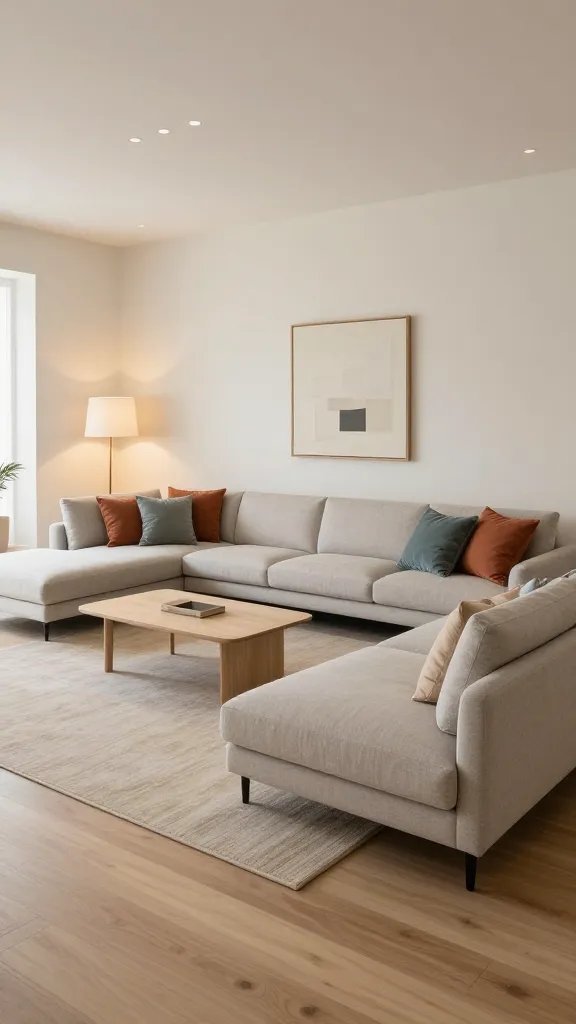
A slim sectional or modular seating arrangement creates natural zones for conversation and lounging. Choose pieces with slim profiles to maximize floor space while still offering comfortable seating.
Why This Setup Works
Sectional configurations define the living area without crushing it. The modular option allows you to reconfigure for entertaining or daily use as needed.
Color and Visual Balance
Keep the upholstery in a neutral or muted color and introduce color through pillows and throws to avoid a heavy, uniform look.
Furniture and Layout Strategy
Position the seating to face a focal point like a TV or fireplace, with a coffee table within easy reach of all seats.
Smart Storage and Decor
Use the chaise end or ottoman with hidden storage to tuck away remotes, magazines, or blankets.
Budget-Friendly Organization Upgrade
Choose one modular piece at a time and re-arrange existing seating to create a new layout instead of buying a whole new system.
Functional Designer Insight
Keep seating with easy access to power outlets and seating that can be rearranged for different gatherings without heavy lifting.
This approach works well for rental spaces or rooms used for multiple activities, like reading, gaming, and movie nights.
12. Wall-Mounted Desk Nook For Remote Work Or Hobbies
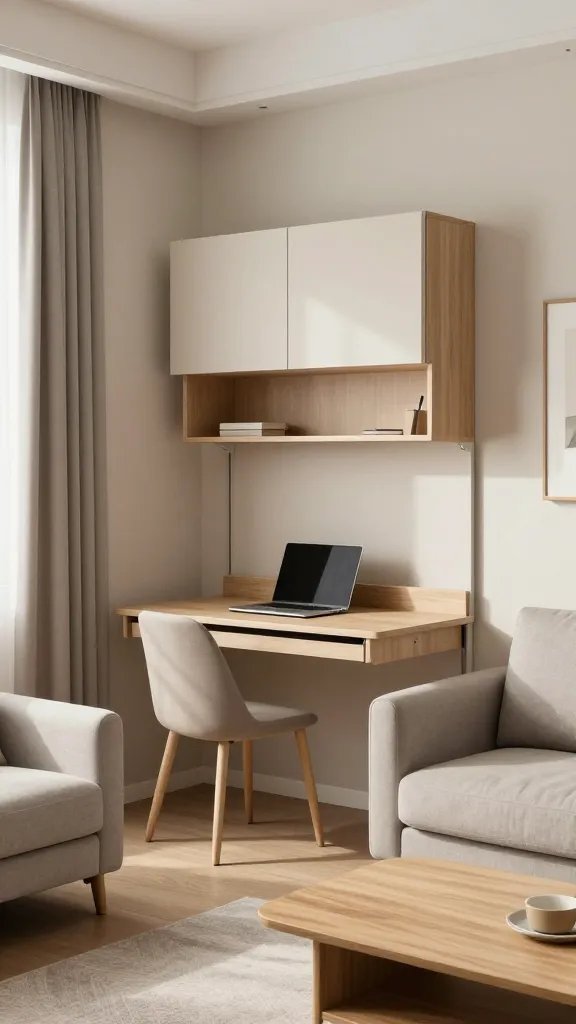
Convert a small wall into a compact desk nook with a fold-down surface and wall-mounted storage. This creates a secondary workspace without sacrificing living area floor space.
Why This Setup Works
A dedicated work area in the living room reduces the need to ferry items back and forth to a separate room. It keeps both work and relaxation spaces organized and harmonious.
Color and Visual Balance
Keep the desk and storage in a neutral tone that matches nearby furniture so the nook remains a subtle part of the room rather than a separate, jarring zone.
Furniture and Layout Strategy
Place the desk near a wall that gets natural light, and ensure the fold-down surface has a comfortable clearance when open.
Smart Storage and Decor
Use small wall-mounted organizers for pens, notebooks, and chargers, and add a slim shelf above for accessories or decorative arts.
Budget-Friendly Organization Upgrade
Choose a ready-made wall-mount kit and a compact desk against the wall to avoid bulky furniture and complicated installation.
Functional Designer Insight
A wall desk keeps the room flexible; it can disappear when not in use, preserving the primary living area’s spacious feel.
This setup is ideal for compact living rooms that double as a small home office or hobby space.
13. Foldable Console Table To Hide Each Day Essentials
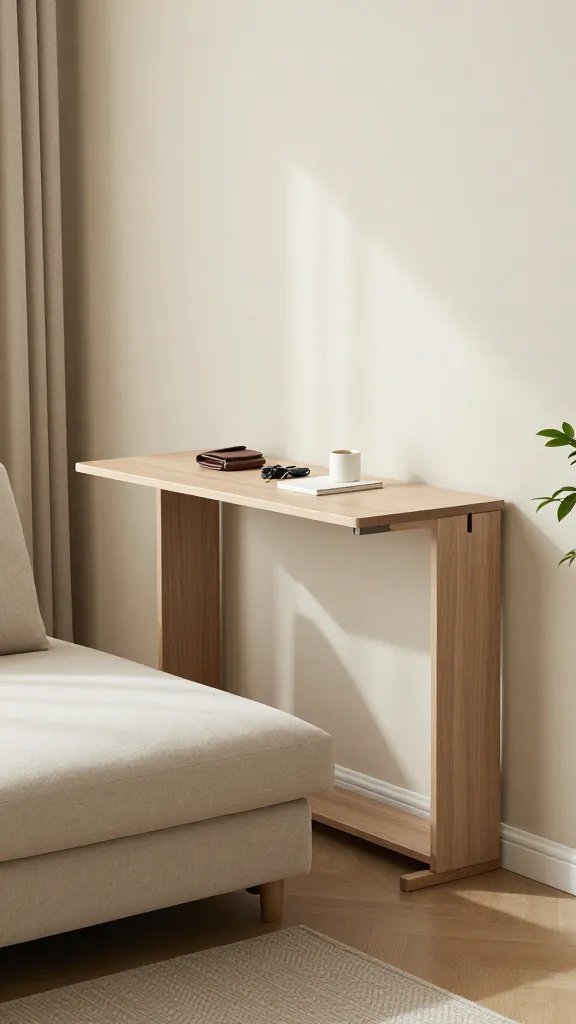
A slim foldable console can tuck behind seating or against a wall, providing a surface for daily essentials that can be tucked away when not needed. Use a shallow shelf beneath for small items.
Why This Setup Works
The console adds surface area for daily rituals while keeping clutter out of the main flow. It’s a smart way to have a rotating display without overwhelming the room.
Color and Visual Balance
Choose a neutral finish that blends with the wall and furniture, letting the surface shine when you pull it out for use.
Furniture and Layout Strategy
Position the console behind seating or along a wall where it won’t interfere with traffic or sightlines.
Smart Storage and Decor
Use a small tray on the top and shallow baskets on the shelf below to corral items such as cables, keys, and quick notes.
Budget-Friendly Organization Upgrade
Repurpose a thrifted or secondhand console and refinish it for a fresh look rather than buying new.
Functional Designer Insight
A foldable surface preserves room flexibility while still offering practical daily use for small spaces.
This approach works in rooms that need occasional extra surface space without committing to full furniture replacement.
14. Hidden Daybed Storage With Soft Zoning
Introduce a small daybed with built-in storage underneath, offering a comfortable lounging spot and a place to tuck away bedding and pillows when not in use. Keep the surrounding area open to maintain flow and light.
Why This Setup Works
A daybed doubles as seating and a bed for guests, while hidden storage keeps extra linens and pillows tucked away yet accessible. It creates a soft zoning that invites relaxation without visual clutter.
Color and Visual Balance
Choose a light upholstery that blends with the room, and pair with muted bedding colors to maintain calm harmony across the space.
Furniture and Layout Strategy
Place the daybed along a wall that doesn’t block pathways, with a slim coffee table nearby to anchor the seating area.
Smart Storage and Decor
Use the under-bed space for storage bins and add a couple of decorative pillows on top to emphasize the lounging function without clutter.
Budget-Friendly Organization Upgrade
Start with a used daybed or a modular couch system and add simple, removable storage boxes for linens and pillows.
Functional Designer Insight
Hidden storage in seating makes daily routines smoother and reduces the urge to stack items around the room, keeping a calm, lived-in feel.
This option suits homes that frequently host guests or have a multi-use living area where lounging and resting need to coexist neatly.
Common Mistakes With Small Living Room Makeover
Adding Storage Without Removing Unneeded Items
Storing more stuff just to store it ends up increasing clutter. Regularly purge items you no longer use and only keep what you truly need or love.
Keeping Everyday Items Too Hard to Reach
If you must climb, kneel, or move heavy objects to access daily necessities, your system will fail. Opt for reachable storage zones and clearly labeled containers.
Using Too Much Open Storage
Open shelves showcase every item; it becomes a stage for clutter. Balance open storage with enclosed drawers or cabinets to hide the less attractive items.
Ignoring Empty Vertical Space
Vertical space is often wasted. Use wall-mounted storage, tall plants, or shelving that extends to the ceiling to draw the eye upward and free floor space.
Choosing Containers Before Measuring the Area
Buying the wrong size storage disrupts flow and creates awkward gaps. Measure the space carefully and choose containers that fit the intended shelves or cabinets.
Budget-Friendly Small Living Room Tips
Reorganize What You Already Own First
Start with rearranging furniture to create distinct zones before buying anything new. A simple swap can reveal new storage opportunities and better traffic flow.
Use Simple Hooks to Free Up Drawer Space
Mount hooks on the inside of cabinet doors or along a wall for quick access to bags, headphones, or remotes, freeing up drawer space for other items.
Turn Existing Furniture Into Double-Duty Storage
Add a storage ottoman or a coffee table with drawers to conceal everyday items, reducing surface clutter without purchasing new pieces.
Repurpose Baskets Creatively
Use baskets under the sofa or on shelves for quick, organized storage that can be easily swapped once contents change.
Paint And Refresh Instead Of Replacing
A fresh coat of paint or new hardware can dramatically alter a room’s feel without the cost of new furniture.
Functional Designer Tips
Keep Daily Essentials Within Easy Reach
Place remotes, chargers, and stationery in a nearby, accessible spot to avoid constant hunting. A small tray or tray-lined bin can do wonders.
Use Closed Storage for Visually Busy Items
Clutter magnets like electronics, cables, and gaming gear benefit from behind-closed-doors storage that keeps surfaces clean and calm.
Protect Clear Walking Paths Around Storage Pieces
Ensure storage units do not intrude into high-traffic areas. Leave at least 2 to 3 feet of clear walking space around major furniture pieces.
Respect Visual Weight And Balance
Distribute heavier pieces evenly around the room so nothing feels visually crowded in one area. Mix light and dark tones to create depth without heaviness.
Plan For Maintenance, Not Perfection
Choose solutions that you can realistically maintain. A well-thought-out system is easier to keep clean and organized over time.
FAQs About Small Living Room Makeovers
Can I improve a small living room without buying new furniture?
Yes. Start by rearranging what you already own, add under-surface storage, and use vertical space for shelves and decorative items. Small swaps can dramatically change the feel.
What is the best storage approach for a tiny living room?
A mix of hidden storage and open display works best. Use closed cabinets for clutter-prone items and open shelves for curated decor and frequently used items.
How can I make a small living room feel bigger?
Light colors, consistent finishes, and ample negative space help. Avoid heavy, dark furniture and keep pathways clear to create a sense of openness.
Should I use a sofa with built-in storage?
Yes, a sofa with storage can dramatically reduce clutter by giving you a ready-made home for blankets, pillows, or magazines without sacrificing seating comfort.
How do I balance open shelves with hidden storage?
Limit the number of display items and use baskets or closed storage behind cabinet doors. Curate a few key pieces for the shelves to maintain calm and order.
Final Thoughts small living room makeover
In a small living room, function and beauty should cooperate, not compete. By combining smart storage with thoughtful layout and calm decor, you create a space that looks inviting and works harder for everyday life. The focus keyword reminds us that organization is not about sacrificing style; it is about designing spaces that support daily habits with ease.
Start with one of the ideas that feels immediately implementable, such as converting a corner into hidden storage or refining a drop zone by the entrance. By making small, sustainable changes you’ll notice everyday improvements in how you use and enjoy your living room. The result is a room that feels calm, balanced, and truly your own.